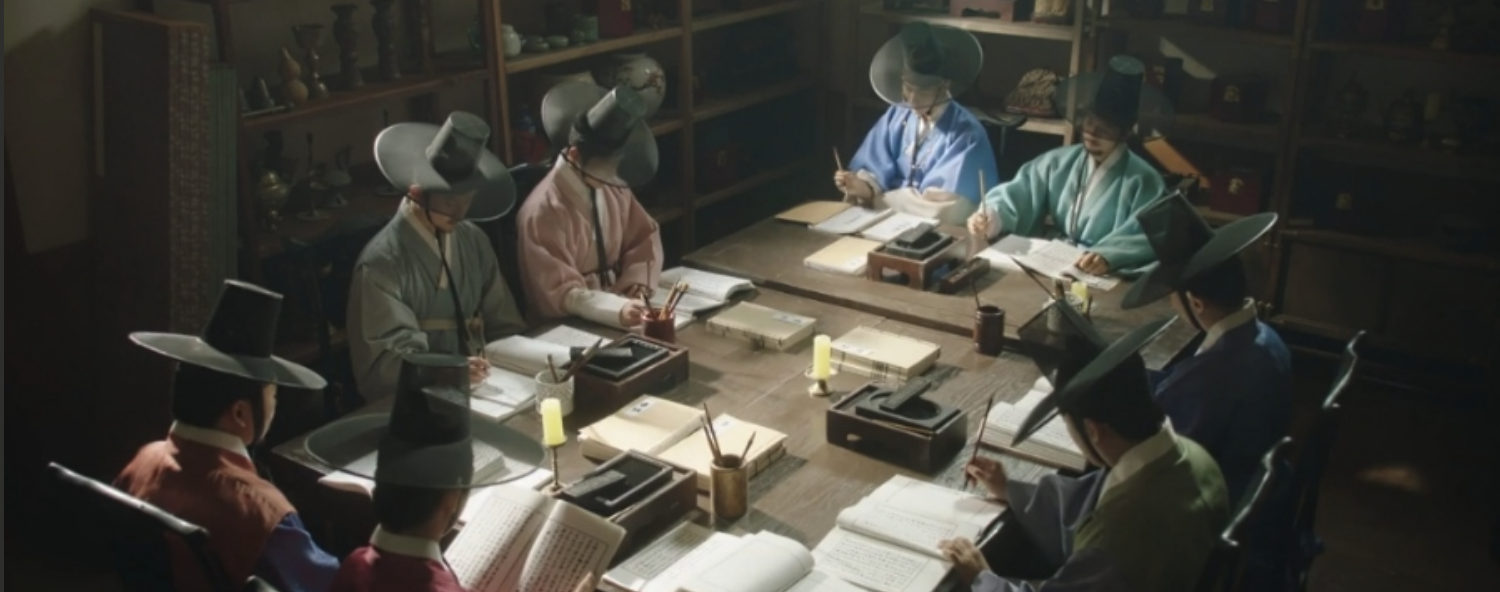
The Joseon seonbi spent a lifetime on cultivation — of character, conduct, and appearance simultaneously. This is not vanity. It is a theory of the self in which the outer surface is evidence for the inner state, and both require ongoing attention.
Seonbi (선비) is the Korean term for the Confucian scholar-gentleman of the Joseon dynasty (1392–1897) — a social ideal defined not by birth rank alone but by the ongoing cultivation of moral character through classical study, ritual practice, and disciplined conduct. In Korean Confucian tradition, the seonbi functions as a model of virtue whose inner cultivation is inseparable from outer expression: the cleanliness of dress, the care of appearance, and the consistency of manner were understood as legible evidence of moral development. The European parallel would be Aristotle’s concept of virtue as a disposition cultivated through practice — hexis, the habituated character — but the comparison breaks at the point of corporeality: for Aristotle, virtuous character is primarily moral and intellectual; for the seonbi ideal, it is equally physical, expressed in the maintenance of the body and its presentation as a continuous moral act.
The Academy of Korean Studies (AKS / 한국학중앙연구원) and the National Museum of Korean Contemporary History (MUCH / 대한민국역사박물관) document the seonbi ideal as a defining formation of Korean elite identity during the Joseon period, with significant continuity into contemporary Korean cultural values around education, discipline, and the relationship between effort and character.
The European reading of Korean care culture — the multi-step skincare routine, the attention to detail in dress, the deliberateness of everyday maintenance — tends to resolve into one of two explanatory frames. Either it is consumer culture (the K-beauty industry created the routine), or it is pressure (the demands of appearance in a hierarchical society). Both frames are partially accurate. Neither is sufficient. The missing element is a philosophical tradition in which the care of appearance is not separable from the cultivation of character — in which maintenance is not grooming but an ongoing moral practice.
That tradition is the seonbi ideal, and it is one of the formations most worth understanding if you want to grasp why Korean care culture is structurally different from European minimalism — not just more elaborate, but operating on a different premise about what maintenance is for.
Suyang (修養): The Concept That Holds the Ideal Together
The seonbi ideal is built around the practice of suyang (수양, 修養) — a term usually translated as “self-cultivation” but that more precisely refers to a process of ongoing refinement that encompasses character, knowledge, conduct, and physical bearing simultaneously. The character 修 means “to cultivate, to repair, to put in order”; 養 means “to nourish, to raise, to sustain.” Together, they describe not a state to be achieved but a practice to be maintained — a continuous attention to the quality of one’s development across all dimensions of the self.
Suyang
The non-separability of inner and outer: This is the point that distinguishes suyang from European self-improvement traditions. In the seonbi framework, inner development produces outer expression as a necessary consequence — not as decoration or performance, but as evidence. A man of developed character walks, speaks, dresses, and maintains his appearance in ways that are legible to others as marks of cultivation. The outer is not a mask over the inner; it is the inner, made visible.

The Joseon scholarly manuals that describe seonbi conduct — including the Gyeongmong yogyeol (격몽요결) of Yi I (이이, 1536–1584), one of the foundational texts on seonbi education archived by AKS — devote considerable space to instructions about dress, bodily cleanliness, and the condition of one’s physical space. These are not secondary concerns appended to the serious business of moral development. They are integrated with it. The logic is that a man who cannot maintain cleanliness and order in his immediate physical environment has not yet developed the discipline required for the cultivation of character — and that the appearance of neglect is not merely a social failure but a moral indicator.
For the seonbi, the outer is not a mask over the inner. It is the inner, made visible. Maintenance is not grooming — it is a legible form of moral practice.
Why This Is Structurally Different from European Minimalism
European minimalism — particularly the design and lifestyle minimalism that emerged from the 20th century — is built on a different premise about the relationship between appearance and self. The minimalist argument is essentially subtractive: remove what is unnecessary, and what remains is more authentic. The self that is most genuinely itself is not the self that is most carefully maintained, but the self that is most unobstructed by the performative and the decorative.
This is a coherent position. It also makes a specific assumption that the seonbi tradition does not share — the assumption that maintenance is primarily performative and therefore potentially inauthentic. In the minimalist frame, the more care you take with your appearance, the more you risk dressing for others rather than for yourself. The authentic self is more likely to be found under the surface than on it.
The seonbi tradition inverts this relationship. There is no authentic self hiding beneath the surface, undistorted by care. The self is constituted through practice — including the practice of maintenance. The outer and inner are not in competition. The quality of care one takes with one’s appearance is not evidence of vanity; it is evidence of the same attentiveness and discipline that constitutes good character in every other domain. Neglecting one’s appearance is not authenticity. It is the same kind of failure as neglecting one’s conduct or study.
Authenticity is found by reduction — removing the performative to reveal the essential self beneath.
Maintenance is a risk: the more elaborate, the more it performs for others rather than expressing genuine self.
The ideal is the self that requires the least maintenance to be fully itself.
Care and vanity are on a continuum; the line between them is blurry and requires constant negotiation.
Authenticity is constituted through practice — the cultivated self is more fully itself, not less.
Maintenance is evidence: the quality of care taken with appearance is legible as character, not performance.
The ideal is the self whose inner development produces appropriate outer expression as a natural consequence.
Care and vanity are distinct categories; the former is a moral practice, the latter a failure of proportion.
The structural consequence of this difference is that Korean care culture and European minimalism are not simply different points on the same spectrum of “how much attention to pay to appearance.” They are operating on different logical foundations. What looks from a minimalist perspective like excessive elaboration — the multi-step routine, the attention to texture and formulation — makes complete sense within the seonbi-derived framework as evidence of attentiveness and discipline. The elaborateness is not the point. The quality of attention is the point.
The Contemporary Inheritance: MUCH Documentation and the Persistence of Suyang
The National Museum of Korean Contemporary History (대한민국역사박물관 / MUCH) documents the persistence of seonbi-derived values through Korea’s rapid modernisation and into the contemporary period. The picture is not straightforward. The actual social class of the Joseon seonbi was dismantled through Japanese colonial rule and the subsequent social reorganisation — the aristocratic basis of the ideal no longer exists. But the value system associated with the seonbi — study, discipline, the cultivation of the self through sustained effort, the legibility of that cultivation in everyday conduct — migrated into the Korean middle-class ideal and from there into broader contemporary Korean culture.
The Korea JoongAng Daily has published several analyses of what contemporary scholars call the “seonbi spirit” (선비 정신) as a cultural value — its presence in educational culture (the absolute seriousness of sustained effort as a moral value, not merely an instrumental one), in professional culture (the expectation that one presents oneself as having taken care), and in the beauty industry’s relationship to its own consumers (the assumption that a well-maintained appearance is a reasonable expectation of anyone who takes their life seriously, regardless of gender).
The gender dimension of this inheritance is worth acknowledging. The historical seonbi ideal was explicitly male — the Joseon Confucian system assigned women to different social roles and different cultivation requirements, with significant restrictions on access to scholarship and public life. The contemporary inheritance of seonbi values into Korean care culture broadly — including beauty culture — represents a transformation rather than a direct continuation. The MUCH archives document this transformation as part of the broader story of how Korean modern identity negotiated its Confucian inheritance, not as a simple recuperation of traditional values.
The Aesthetic Dimension: When Discipline Becomes a Form of Beauty

There is a moment in the seonbi philosophical literature — visible most clearly in Yi Hwang’s (이황, 1501–1570) writing on the relationship between inner cultivation and outward bearing — where cultivation is described not merely as moral correctness but as something closer to beauty. A man who has developed his character fully carries himself in a way that is aesthetically as well as morally admirable. The two dimensions are not separate. The quality of bearing — the steadiness, the proportion, the absence of agitation — is both evidence of moral development and a form of beauty in itself.
This is a significant claim about the relationship between ethics and aesthetics, and it runs against the grain of the dominant European aesthetic tradition since Kant, which has generally maintained a principled distinction between moral worth and aesthetic value. For Kant, the beautiful is appreciated without interest — it is precisely the detachment from moral consideration that characterises the aesthetic response. For Yi Hwang’s neo-Confucianism, this detachment would be a misunderstanding of what aesthetics is. The beautiful and the good are not separate domains requiring conceptual boundary maintenance; they are the same quality appearing in different registers.
The contemporary resonance of this is in the Korean aesthetic ideal of 단아함 (danahan) — a term that describes a quality of understated, composed elegance that has moral as well as aesthetic connotations. It is not beauty as spectacle or beauty as maximalism. It is beauty as evidence of cultivation — the appearance of someone who has taken care in the right way, for the right reasons, over time. It is the aesthetic that emerges from suyang, not from display.
Vanity and the Limits of the Ideal
It would be a misreading of the seonbi tradition to present it as unambiguously positive about care and appearance. The same philosophical literature that integrates maintenance into the cultivation ideal also repeatedly warns against its corruption — against the slide from disciplined attention into ostentatious display, from care as moral practice into care as status performance.
The Confucian category of 허영 (heoyeong) — vanity, or empty appearance — is precisely the failure mode of seonbi cultivation: the situation in which the outer attention to appearance has become disconnected from inner development, in which one presents the signs of cultivation without the substance. This is not a minor concern in the literature. It receives sustained attention because it represents the failure mode that is structurally adjacent to the ideal. Care and vanity look similar from the outside. The distinction is located in the quality of the inner development — whether the outer maintenance is the expression of actual cultivation or a substitute for it.
Contemporary Korean cultural critics have been explicit about the ways that the beauty industry has exploited the seonbi-derived association between appearance and character — creating a market in which the purchase of products is positioned as a form of self-cultivation rather than consumption, and in which the failure to maintain appearance is subtly coded as a moral failure. The Korea JoongAng Daily commentary on this dynamic has been pointed. The critique is not that the seonbi ideal itself is problematic — it is that the association between external maintenance and inner virtue has been captured by commercial logic in ways that the original framework would have recognised as exactly the kind of corruption it warned against.
Working across Korea and Europe over fifteen years, the most persistent misunderstanding I observed on both sides was about what the other culture’s relationship to maintenance meant. European colleagues working with Korean clients sometimes read the attention to detail — the care over presentation, the specificity of conduct — as formality or social performance. Korean collaborators working in European contexts sometimes read the European tendency toward informality as a kind of studied casualness that was actually performing its own ideal, the ideal of effortlessness.
Both readings were partly correct and substantially incomplete. What neither captures is that the cultures are not just doing the same thing at different levels of intensity. They are operating on different premises about what maintenance is for. In the framework I encountered repeatedly in Korean creative industries — particularly among the generation trained through both Confucian-inflected Korean education and international exposure — the question of how you presented yourself was inseparable from the question of what kind of work you were capable of doing. Not in the sense of impression management, but in the sense that the attention required to present well was the same attention required to work well. One was evidence of the other.
From a product development perspective, this has a direct implication. Formulating for the Korean market requires understanding that the routine is not just a sequence of products — it is a daily practice that carries cultural meaning about the kind of person who performs it. The European market tends to evaluate a product on what it does. The Korean market evaluates it on what it says about the person using it. This is not irrationality or vanity. It is a coherent framework in which the two evaluations cannot be separated.
Frequently Asked Questions
What is the seonbi ideal in Korean culture?
The seonbi (선비) is the Joseon-era Confucian scholar-gentleman, defined by the ongoing cultivation of moral character through study, ritual practice, and disciplined conduct. In the seonbi framework, inner cultivation and outer expression are inseparable — the quality of care taken with appearance and conduct is legible evidence of moral development, not separate from it.
How does Korean care culture differ structurally from European minimalism?
European minimalism tends to locate authenticity beneath the surface — maintenance risks becoming performance, and the authentic self is revealed by reduction. The seonbi cultivation framework holds the opposite: the self is constituted through practice, and the quality of maintenance is evidence of the quality of attention that constitutes good character. The elaborateness of a routine is not the point; the attentiveness is. These are different logical premises, not different points on a spectrum.
Is the seonbi ideal still relevant in contemporary Korean culture?
The institutional basis of the historical seonbi — the Joseon aristocratic class — no longer exists. But the associated values (sustained effort as a moral practice, the legibility of cultivation in everyday conduct, the non-separability of inner and outer development) persist in Korean educational culture, professional culture, and the beauty industry’s relationship to its consumers. MUCH documents this persistence as part of Korean modern identity’s negotiation of its Confucian inheritance, with significant transformation rather than direct continuity.
Does the seonbi framework justify contemporary Korean beauty standards as morally positive?
No, and this conflation is exactly what the tradition warns against. The seonbi literature distinguishes explicitly between care as moral practice (cultivation-oriented, proportionate, integrated with inner development) and vanity (the outer signs of cultivation disconnected from inner substance). Contemporary beauty industry capture of the cultivation-appearance association has been criticised by Korean cultural commentators as precisely the failure mode the original framework identified — turning the practice of maintenance into status performance and consumption.
What is suyang (修養) and why does it matter for understanding Korean aesthetics?
Suyang is the practice of ongoing self-cultivation — the continuous refinement of character, conduct, knowledge, and physical bearing simultaneously. It is the organising concept of the seonbi ideal, and it matters for understanding Korean aesthetics because it is the framework in which maintenance becomes a moral act rather than a cosmetic one. Without suyang, the elaborateness of Korean care culture looks like a consumer behaviour. With it, it becomes legible as a daily practice of self-cultivation — which is a structurally different thing.
How does the seonbi tradition relate to what is described as 단아함 (danahan) in Korean aesthetics?
단아함 (danahan) — understated, composed elegance with moral connotations — is one of the aesthetic ideals that the seonbi cultivation tradition produces. It is the aesthetic of someone who has taken care in the right way, over time, for the right reasons. It is explicitly not spectacular or maximalist. The composed quality of danahan is evidence of cultivation, not display — which is why it functions as an aesthetic ideal rather than a merely social one.
References
- Academy of Korean Studies (AKS / 한국학중앙연구원) — Scholarship on Joseon Confucian philosophy, seonbi ideal, and Yi Hwang/Yi I literary archives.
- National Museum of Korean Contemporary History (MUCH / 대한민국역사박물관) — Documentation of Confucian values in Korean modern identity formation.
- Korea JoongAng Daily — Contemporary analysis of the “seonbi spirit” in Korean educational, professional, and beauty culture.
- Martina Deuchler. The Confucian Transformation of Korea: A Study of Society and Ideology. Cambridge: Harvard University Press, 1992. — Foundational scholarship on the implementation of neo-Confucian social philosophy in Joseon.
- Yi I (이이 / 율곡). 격몽요결 (Gyeongmong yogyeol). 1577. — Joseon-era manual on seonbi education, including instructions on bearing, dress, and daily conduct. Archived at AKS.
- Aristotle. Nicomachean Ethics. Trans. Terence Irwin. Indianapolis: Hackett, 1999. — European comparative framework for virtue as cultivated disposition (hexis); the comparison with suyang breaks at the point of corporeality.
- Immanuel Kant. Critique of the Power of Judgment. Trans. Paul Guyer. Cambridge: Cambridge University Press, 2000. — The Kantian aesthetic framework (purposiveness without purpose, disinterested pleasure) against which the seonbi integration of ethics and aesthetics is positioned.



Leave a Reply