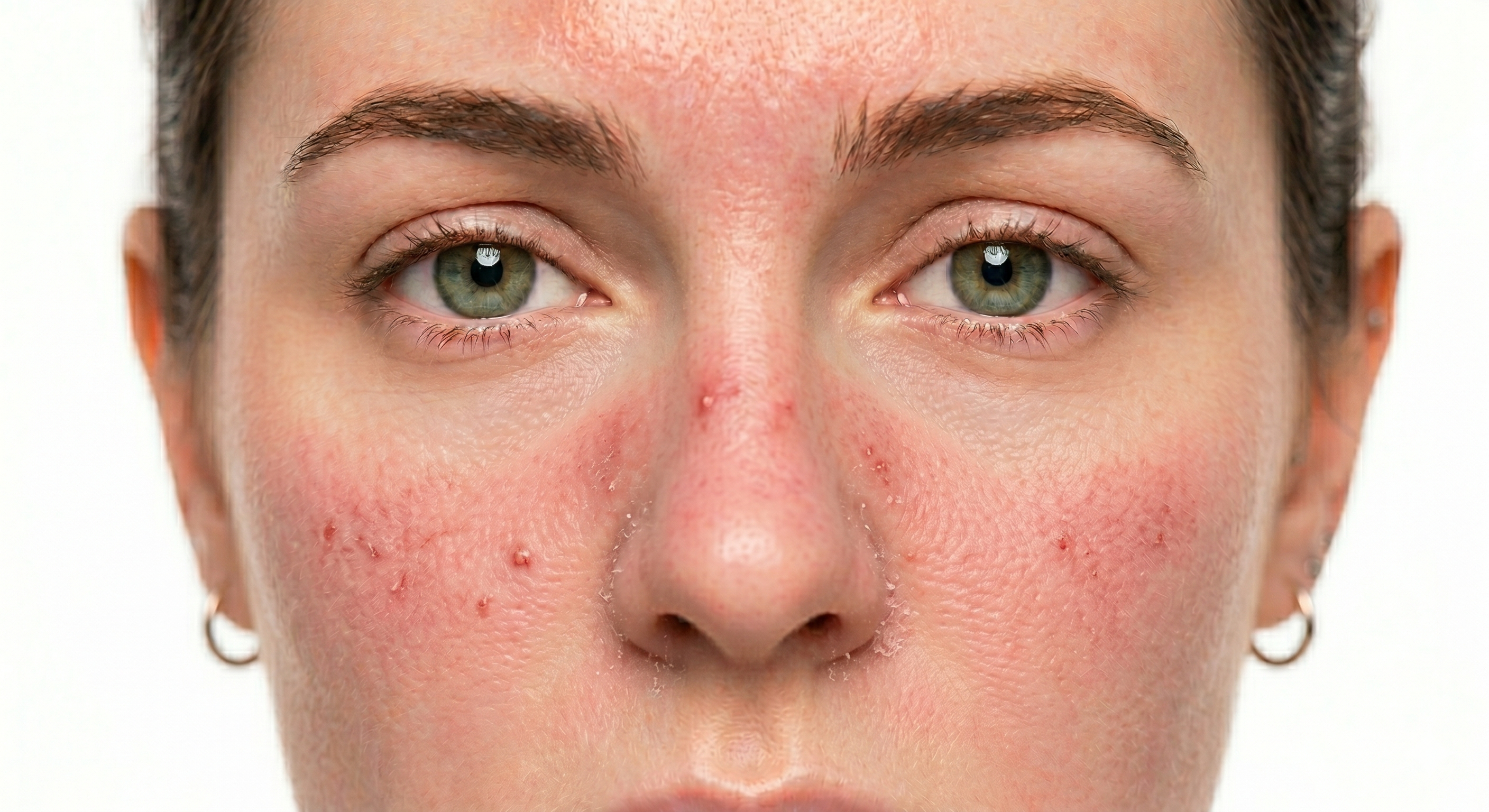
Humidity is rising. Central heating is going off. And somewhere in that transition, the barrier you spent all winter managing stops cooperating. This is not random — it follows a predictable pattern, and the ingredient response is specific.
April in Berlin feels like relief. The heating clicks off. The radiator hiss stops. Humidity climbs from the 25–35% range that characterised the indoor winter environment back toward something that feels closer to tolerable. For most people, this reads as the skin situation improving. For a significant portion, the next two to four weeks are some of the most disruptive the barrier will experience all year.
The disruption is not caused by a single change. It is caused by the speed of several changes happening simultaneously: outdoor humidity rises while indoor environments are still adjusting; UV index begins climbing toward the 3–4 range while the barrier is still structured for low-light, low-humidity conditions; and the skin’s lipid production has been calibrated across months of cold weather to a different environmental baseline. The transition window — roughly April 1 through May 10 in northern EU climates — asks the barrier to re-regulate faster than it is designed to.
Understanding what is actually happening in that window is the precondition for responding to it usefully. The ingredients that matter here — Niacinamide and Panthenol — are not interchangeable barrier supports. They work through different mechanisms at different levels of the skin structure, and combining them without understanding why produces results that are approximately correct but often undershoots what is actually possible.
| City | March Indoor RH | April Transition RH | May Stabilised RH | April UV Index (avg) |
|---|---|---|---|---|
| Berlin | 25–32% | 35–50% (fluctuating) | 50–58% | 3–4 |
| Amsterdam | 28–36% | 38–52% (fluctuating) | 52–60% | 3–4 |
| Copenhagen | 22–30% | 33–48% (fluctuating) | 48–55% | 2–3 |
| Paris | 30–40% | 40–55% (fluctuating) | 55–62% | 4–5 |
Indoor RH estimates based on unventilated residential environments. Transition window fluctuation is the key variable — not the endpoint values.
What the Barrier Does During the Transition
The skin barrier — specifically the stratum corneum — maintains homeostasis through two interdependent systems: the lipid lamellar structure between corneocytes, and the Natural Moisturising Factor (NMF) within the corneocytes themselves. In winter conditions, both systems adapt to conserve moisture against the osmotic pressure of dry indoor air. The lamellar lipids (ceramide, cholesterol, free fatty acids in an approximately 1:1:1 molar ratio) become slightly more compact. NMF components, particularly pyrrolidone carboxylic acid (PCA) and urocanic acid, shift their water-retention behaviour accordingly.For a detailed breakdown of how humectants like hyaluronic acid behave under low-humidity European conditions, read more here.
When ambient humidity rises, the barrier does not simply relax into the new conditions. It has to re-regulate — and the re-regulation process produces a temporary instability period. Ceramide synthesis in the lamellar bodies requires time and functional enzyme activity. The osmotic gradient across the stratum corneum shifts before the structural response catches up. This mismatch is the disruption window.
On top of this, increasing UV exposure in April begins triggering keratinocyte responses that the barrier has not had to manage since October. UV radiation in the UVA range (present even on overcast days) induces oxidative stress in the stratum corneum and accelerates transepidermal water loss (TEWL) via lipid peroxidation. The skin is simultaneously trying to up-regulate its defensive capacity against UV and re-regulate its moisture-retention architecture — two processes that draw on overlapping cellular resources.
The problem is not that humidity is rising. The problem is the speed. The barrier re-regulates in days to weeks; the environment changes in hours.
The result, for many people, is a skin response that looks confusingly like a winter problem — tightness, occasional flaking, heightened sensitivity, breakouts — in conditions that feel like they should be getting easier. This is not a failure of the routine. It is a failure to account for transition-specific physiology.
Why Niacinamide Addresses the Transition Specifically
Niacinamide (vitamin B3, INCI: Niacinamide) has an unusually well-documented mechanism profile for a topical ingredient. The relevant actions for barrier disruption are three: ceramide synthesis support, TEWL reduction, and anti-inflammatory modulation. Each of these addresses a different aspect of the spring transition problem.
Effective range: 2–10%
Optimal for barrier: 4–5%
TEWL reduction: By supporting lamellar body secretion, niacinamide contributes directly to reducing transepidermal water loss. This effect is measurable within 2–4 weeks of consistent application — which is why beginning application before the transition window rather than during it produces better outcomes.
Anti-inflammatory action: Niacinamide reduces the release of pro-inflammatory cytokines from keratinocytes, relevant during the spring period when UV-induced stress begins triggering low-level inflammatory responses. This is not the primary mechanism in barrier repair — but it is a meaningful secondary benefit in this specific seasonal context.
The practical implication of the ceramide synthesis pathway is that niacinamide works upstream. It does not deposit ceramide on the skin surface — it supports the skin’s own synthesis process. This is categorically different from ceramide-containing emollients, which work by replenishment. Both have roles in a barrier support approach, but they are not substitutes for each other. Niacinamide’s contribution takes several weeks to express fully, which is why the timing of introduction matters.
In EU conditions specifically, the 4–5% concentration range is where clinical evidence is strongest for barrier outcomes. Products positioned at 10% are targeting the hyperpigmentation and sebum-regulation applications of niacinamide, which require higher concentrations and operate via different mechanisms. For barrier repair in the context of the spring transition, 4–5% applied consistently is the appropriate target — not the maximum possible dose.
Panthenol’s Role: Surface Repair While the Deeper Repair Proceeds
Panthenol (INCI: Panthenol, also listed as Provitamin B5 or D-Panthenol) operates at a different level of the barrier architecture than niacinamide. Where niacinamide works via cellular metabolism, Panthenol works through direct epidermal penetration and conversion to pantothenic acid — a compound that plays a role in cell proliferation and the wound-healing cascade.
Effective range: 1–5%
D-Panthenol (preferred stereoisomer)
Cell proliferation support: Once converted to pantothenic acid in the epidermis, Panthenol participates in co-enzyme A synthesis, which is required for fatty acid metabolism — including the fatty acids used in lamellar lipid construction. This creates a meaningful, if indirect, link to the same barrier-reconstruction pathway niacinamide supports through a different entry point.
Soothing action: Panthenol has well-documented anti-irritant properties, reducing erythema and subjective sensitivity. In the spring transition context — where barrier instability often presents as heightened reactivity — this is clinically relevant, not cosmetic. A 2014 meta-analysis by Proksch et al. (PMID: 24985735) confirmed panthenol’s role in accelerating epidermal barrier recovery.
The combination logic is sequential: Panthenol provides surface-level support while niacinamide builds the deeper enzymatic response. Applying only niacinamide leaves a two-to-three week gap in surface protection at the moment it is most needed. Applying only Panthenol addresses the symptom without the mechanism. The reason this combination appears repeatedly in well-formulated barrier repair products is not marketing synergy — it is the actual mechanism alignment.
What to Look For in Formulations — and What to Question
The EU cosmetics market has absorbed both niacinamide and panthenol into a range of product categories, not all of which deploy them at concentrations where the barrier mechanisms are active. Several things are worth checking before assuming a product will deliver the transition-period support the label implies.
For niacinamide: the INCI list should show Niacinamide within the first five to eight ingredients for a meaningful concentration. Products with niacinamide listed after the preservatives, at positions 15–20 in a long formula, are likely at sub-1% concentrations — adequate for the antioxidant role but insufficient for the ceramide synthesis support discussed above. There is no EU regulation requiring percentage disclosure for cosmetic ingredients, so ingredient position is the only publicly accessible proxy for concentration.
For Panthenol: both D-Panthenol and DL-Panthenol are commercially available. D-Panthenol is the active stereoisomer; DL-Panthenol is a racemic mixture in which approximately half the molecule is the inactive L-form. Premium formulations specify D-Panthenol. The EU cosmetics database (CosIng) lists both forms; neither is restricted under EC 1223/2009, but the choice of stereoisomer is a formulation quality signal.
Products that combine both ingredients in a single serum or moisturiser are worth examining for the ratio rather than simply confirming both are present. A formula with 5% niacinamide and 0.5% panthenol will behave differently in this context than one with 4% niacinamide and 3% panthenol — the panthenol concentration in the first is below where its humectant action is clinically significant. Aim for products where both ingredients appear at meaningful positions in the INCI list.
Ingredient position in an INCI list is the only publicly available proxy for concentration. Learn to read it as a signal, not a guarantee.
The Spring Routine Adjustment
The transition period calls for a specific intervention logic, not a complete routine overhaul. The goal is to close the protection gap — the window between when the barrier starts re-regulating and when it stabilises at the new seasonal baseline. This takes approximately three to five weeks in most northern EU climates, from roughly late March through late April.
The most common mistake is delaying the response until symptoms appear. By the time tightness, sensitivity spikes, or disrupted texture are present, the barrier has already been destabilised for one to two weeks. Starting the niacinamide application in the first week of March — ahead of the heating switch-off — means the ceramide synthesis support is already active when the transition begins. Panthenol application can begin at the same point or slightly later, during the active transition window, as its action is faster-expressing.
The winter occlusive — whether that is a ceramide-heavy cream or a dedicated barrier balm — should not be abruptly dropped as temperatures rise. The temptation to switch to lighter textures in April is understandable, but the barrier is not yet ready to manage without the support. A staged reduction makes more physiological sense: maintain the occlusive through the active transition period (approximately April 1–20 in Berlin conditions), then begin introducing the lighter spring moisturiser alongside it rather than as a replacement.
SPF becomes non-negotiable in April regardless of overcast conditions. The UV index in Berlin reaches 3–4 during April, which exceeds the threshold for cumulative UV damage even on grey days. A barrier that is already in re-regulation is more vulnerable to UV-induced lipid peroxidation — which degrades lamellar structure — than a stable barrier. The combination of transition-period instability and UV exposure without protection is where the worst April skin outcomes originate.
Product Criteria for the Transition Window
For the niacinamide application, look for a serum or lightweight moisturiser with niacinamide at 4–5% alongside minimal fragrance. Fragrance in a barrier-repair formula during a period of heightened sensitivity is a formulaic own-goal — some of the most common fragrance constituents (linalool, limonene, citronellol) are mild allergens that can trigger exactly the inflammatory response niacinamide is working to suppress.
For the panthenol component, a dedicated panthenol serum at 2–3% or a moisturiser with D-Panthenol listed in positions 4–8 of the INCI is adequate. Some of the most effective panthenol vehicles are gel-texture products rather than creams — the water-based delivery allows the panthenol to penetrate efficiently while not adding occlusive weight to a formula that may already include a heavier moisturiser.
The following are based on INCI position analysis and published ingredient percentages where available. Please verify seller details, shipping eligibility, and ingredient lists before purchase.
Niacinamide (4–5% range):


Panthenol serums / D-Panthenol formulas:


Frequently Asked Questions
Why does my skin get worse in April even though humidity is rising?
The barrier re-regulates in response to environmental change, but the re-regulation process itself creates a temporary instability period. The osmotic gradient across the stratum corneum shifts faster than the ceramide synthesis and lipid organisation can compensate. This mismatch — not the higher humidity — is what produces the disruption symptoms.
Can I just use ceramide cream instead of adding niacinamide?
They do different things. A ceramide cream replenishes the lipid matrix from outside. Niacinamide supports the skin’s own synthesis of ceramides from inside the keratinocyte. Both are useful, but niacinamide addresses the root mechanism while ceramide cream addresses the immediate deficit. For the transition window, both have a role — though niacinamide’s timeline means it needs to be started before the disruption rather than in response to it.
What concentration of niacinamide is actually doing something for barrier repair?
The ceramide synthesis data is clearest at concentrations of 2% and above, with 4–5% being the well-documented range for barrier outcomes. The 10% products you commonly see are designed for sebum regulation and hyperpigmentation — different mechanisms, higher dose. For spring barrier support specifically, 4–5% is adequate and less likely to cause the flushing that occasionally occurs at higher concentrations in sensitive individuals.
Does the difference between D-Panthenol and DL-Panthenol actually matter in practice?
In clinical terms, yes. D-Panthenol is the biologically active form; L-Panthenol does not convert to pantothenic acid in the same way. Racemic DL-Panthenol is half the active concentration for the same listed percentage. At low concentrations (1–2%), this distinction becomes practically significant. At higher concentrations (3%+), there may be enough active D-form even in a racemic product. When the choice exists, D-Panthenol is the better-specified ingredient.
Is the spring transition problem worse in hard water cities like Berlin?
The evidence suggests yes. Berlin tap water at 300–400 mg/L TDS contains calcium and magnesium ions that interact with the skin surface during cleansing, degrading NMF components and mildly disrupting the acid mantle. A barrier that is already in re-regulation from the seasonal transition is more susceptible to these interactions than a stable barrier. This is one reason Berlin-based readers consistently report more pronounced seasonal disruption than readers in softer-water cities at comparable latitudes.
Should I change anything about SPF use during the spring transition?
The main change is consistency rather than product type. UV index 3–4 in April is enough to cause cumulative UV damage and lipid peroxidation in an unstable barrier — even on overcast days. If you have been skipping SPF on cloudy winter days, April is the point where that stops being a low-risk habit. The barrier is more vulnerable during re-regulation, and UV exposure during this window extends the disruption period.





Leave a Reply