Fermented skincare is the category most at risk from imprecise language. “Probiotic,” “ancient wisdom,” “microbiome-supporting” — these terms explain less than they appear to. What fermentation is actually doing for each ingredient class is specific, mechanistically documented, and considerably more interesting than the category framing suggests.
The short version is this: fermentation is a genuinely useful process for certain ingredient categories, and the evidence for specific ingredients is stronger than the general framing implies. But “fermented = better” is not a principle with uniform support. Whether fermentation improves a given ingredient depends entirely on which organism is fermenting which substrate — and that requires ingredient-level evidence, not category-level assumptions.
Galactomyces Ferment Filtrate (GFF)
Fermentation organism: Galactomyces yeast
Key pathway: AhR activation
EU relevance: Filaggrin deficiency is implicated in barrier dysfunction with higher prevalence in northern European populations — the same population most affected by low indoor humidity from central heating. Kyushu University research also found GFF activates NRF2 (master antioxidative transcription factor), enhancing epidermal differentiation and downregulating pro-inflammatory signalling.
Evidence caveat: Several key published studies list researchers with financial relationships to Procter & Gamble (which markets SK-II / Pitera™). The findings are consistent across independent replications, but the funding context is relevant to evidence assessment.
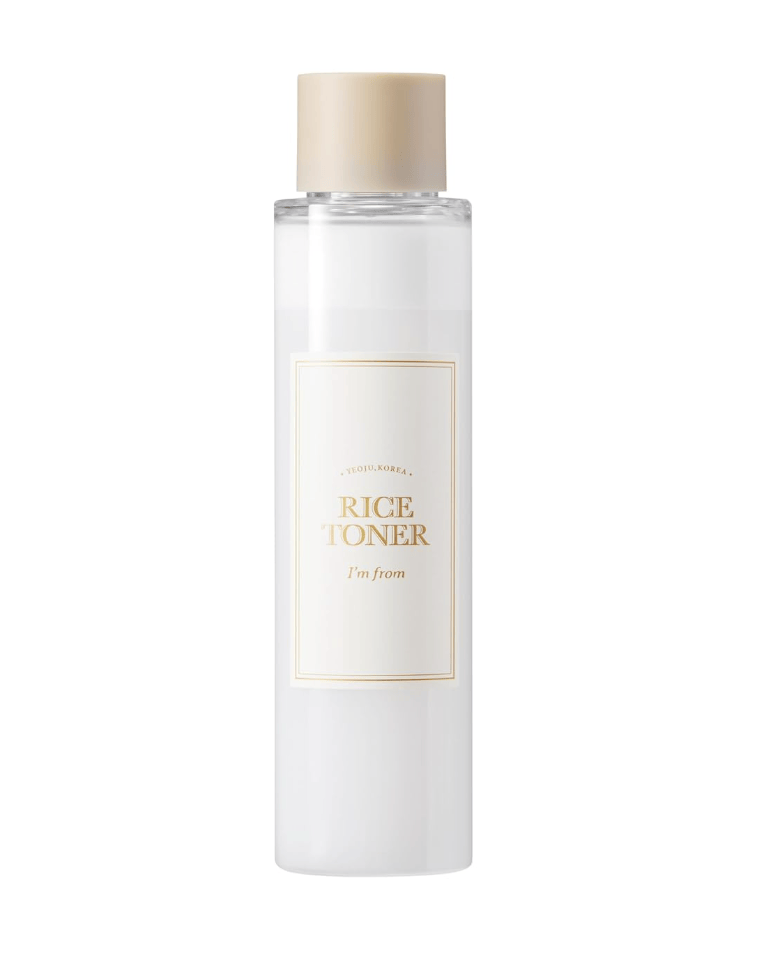
Rice Ferment Filtrate
Organisms: S. cerevisiae or A. oryzae
Evidence base: heterogeneous
What the evidence supports: The moisturising and barrier-supporting effects are the most consistently replicated across studies. The brightening claims — relating to kojic acid and ferulic acid produced as fermentation byproducts — are real but concentration-dependent. At concentrations found in standard formulations, the brightening effect is mild and cumulative over weeks rather than visible within days.
INCI label note: SACCHAROMYCES/RICE FERMENT FILTRATE on a label describes the production process, not a specific composition. The functional profile depends on the specific fermentation used — which is not disclosed on consumer product labelling.
Lactobacillus Ferment
Note: bacteria, not live organisms
EU regulatory status: compliant
What the ingredient actually does: Lactobacillus ferment and lysates contain cell wall components — peptidoglycans, lipoteichoic acids — that interact with toll-like receptors in keratinocytes. This modulates the skin’s immune response and can reduce inflammatory signalling. Published research shows measurable reduction in IL-6, IL-8, and TNF-α in keratinocyte cultures treated with Lactobacillus lysate. The anti-inflammatory mechanism is real; the “probiotic” framing is not technically accurate.
EU context: In Germany and France, pharmacy skincare brands (La Roche-Posay, Avène, Vichy) have increasingly incorporated Lactobacillus ferment into their lines. The ingredient is well-tolerated and has a clean EU regulatory status.
The ingredient evidence is stronger than the category framing. Evaluate each fermented ingredient specifically — not the category they belong to.




Frequently Asked Questions
Is “probiotic skincare” actually delivering live bacteria to skin?
No. EU cosmetics regulations require preservative systems that eliminate live bacteria. What these products contain are postbiotics (fermentation byproducts) or lysates (broken-down cell components). These have real mechanisms — they interact with toll-like receptors in keratinocytes and modulate inflammatory signalling — but calling them “probiotic” is technically inaccurate under the standard definition requiring live organisms.
Why is Galactomyces Ferment Filtrate specifically recommended for European winter skin?
GFF activates filaggrin and loricrin gene expression via the AhR pathway. Filaggrin deficiency is more prevalent in northern European populations and is implicated in barrier dysfunction under low-humidity conditions — exactly the conditions produced by central heating in German and Dutch homes. The mechanism addresses the specific structural problem, not just the symptom.
Do two products with the same INCI name for rice ferment contain the same ingredient?
Not necessarily. SACCHAROMYCES/RICE FERMENT FILTRATE describes the production process, not a specific composition. Different fermentation strains, temperatures, and durations produce different active profiles. Without the manufacturer disclosing their specific process parameters, the INCI name alone does not guarantee equivalent performance between products.
Are fermented ingredients safe under EU Cosmetics Regulation?
Yes. Galactomyces ferment filtrate, rice ferment filtrate, and Lactobacillus ferment are all permitted under EC 1223/2009 and listed in CosIng without restrictions. The EU regulatory framework evaluates these as finished ingredient extracts, not as live organisms — which is the accurate characterisation of how they appear in formulations.
Is the “sake brewers’ hands” observation about GFF scientifically valid?
The observation is accurate as far as it goes — sake brewery workers’ hands show notably smooth skin. The proposed mechanism (GFF skin benefit) is now reasonably well-characterised through the AhR pathway research. The limitation is that brewery exposure involves prolonged, high-concentration skin contact with fresh ferment, which is not the same condition as applying a diluted filtrate in a cosmetic formulation. The mechanism is credible; the direct extrapolation from brewery to product is an oversimplification.
** Affiliate disclosure: Links above are affiliate links. JJJOZ earns a small commission on qualifying purchases at no cost to you. Product selection is based on formulation criteria only — not commercial relationships with brands.
Related posts





Leave a Reply