
The Comparison That Gets Made Too Simply
Korean skincare vs European skincare is often framed as a product count debate: seven steps versus two, elaborate versus minimal, enthusiastic versus stoic. This framing misses most of what is actually different between the two approaches, and it does so in a way that makes it hard to make useful decisions about either.
The more interesting difference — and the one with practical consequences for anyone in Europe who uses Korean skincare products — is philosophical. Korean and European skincare start from different assumptions about what skin is for, what the relationship between maintenance and treatment should be, and how much intervention is appropriate before a problem visibly presents itself.
These differences are not arbitrary. They are the product of distinct medical traditions, different climate contexts, different regulatory frameworks, and — this part is usually omitted from beauty content — different cultural relationships with the body’s surface as a communicative layer.
What follows is an attempt to make those differences clear enough to be useful, rather than interesting enough to be shareable.
Skin as Maintained Infrastructure vs Skin as Treated Problem
The foundational difference between Korean and European skincare philosophy can be stated simply: Korean skincare is preventive; European skincare is largely responsive.
In Korean skincare tradition, skin health is understood as something that requires ongoing, daily maintenance — the same logic that governs diet, sleep, and exercise in a wellness framework. The goal is to prevent barrier compromise before it occurs. The seven-to-ten step routine that non-Korean observers often find excessive is not designed to fix a problem; it is designed to ensure the conditions for a problem never develop.
European skincare culture — and here a meaningful distinction exists between northern and southern European practices, as well as between mass-market and clinical skincare — tends to intervene at the point of visible change. Moisturiser is applied when skin feels dry. Treatment products are used when acne appears, when pigmentation develops, when lines become visible. The default state of skin is assumed to require little unless something is visibly wrong.
This distinction shapes product development on both sides. Korean formulations are built for daily application over a sustained period — they are designed to accumulate effect. European clinical formulations are often higher in active concentration, designed for shorter-term intervention at a defined problem. A Korean centella serum used for three months produces a different kind of change than a European retinoid used for three months: both produce real change, but they are working on different timescales and doing different things to the skin.
For a European person using Korean products, the implication is significant: the products are not doing nothing when you cannot see a visible effect in two weeks. They are working on a preventive logic that makes itself measurable over months, not days. Stopping because results are not rapid is the primary way to miss what Korean skincare is actually designed to do.
The Barrier-First Principle and Its European Equivalent
Korean skincare has a clinical concept at its centre that Western dermatology has arrived at more recently and somewhat reluctantly: the skin barrier as primary determinant of skin health. In Korean dermatological literature, this dates to at least the 1990s in terms of its influence on commercial product development. It was present as a principle in Korean skincare consumer culture long before the global K-beauty wave of the 2010s made it legible to international audiences.
The European equivalent is not a coherent philosophy so much as a clinical consensus that has gradually shifted. European dermatology — particularly the German and Scandinavian schools — has historically emphasised the skin as a symptom indicator: skin conditions are treated through the skin, but the root cause is more often sought systemically (allergy, diet, stress, hormones). The barrier itself was not a primary focus of clinical attention in the same way.
This is changing. The atopic dermatitis research of the 2000s and 2010s — particularly work on filaggrin gene mutations in northern European populations — established that barrier dysfunction is not just a consequence of eczema but frequently a cause, or at minimum a co-determining factor. This research has made the barrier-first principle increasingly accepted in European clinical dermatology.
The commercial skincare market has followed slowly. The language of “barrier repair” and “skin microbiome” is now common in European pharmacy skincare — particularly in La Roche-Posay, Avène, and Eucerin, brands with a structural presence in German and French pharmacies. But the underlying philosophy still differs: European barrier-focused products are typically designed as corrective treatments for compromised skin, while Korean barrier-focused products are designed as preventive maintenance for healthy skin.
This is not a value judgement about which approach is superior. It is a practical observation about why layering Korean preventive skincare with European corrective treatments requires some care — the assumptions about skin state embedded in each product differ in ways that are not always obvious from the ingredient list.
Texture as Cultural Communication
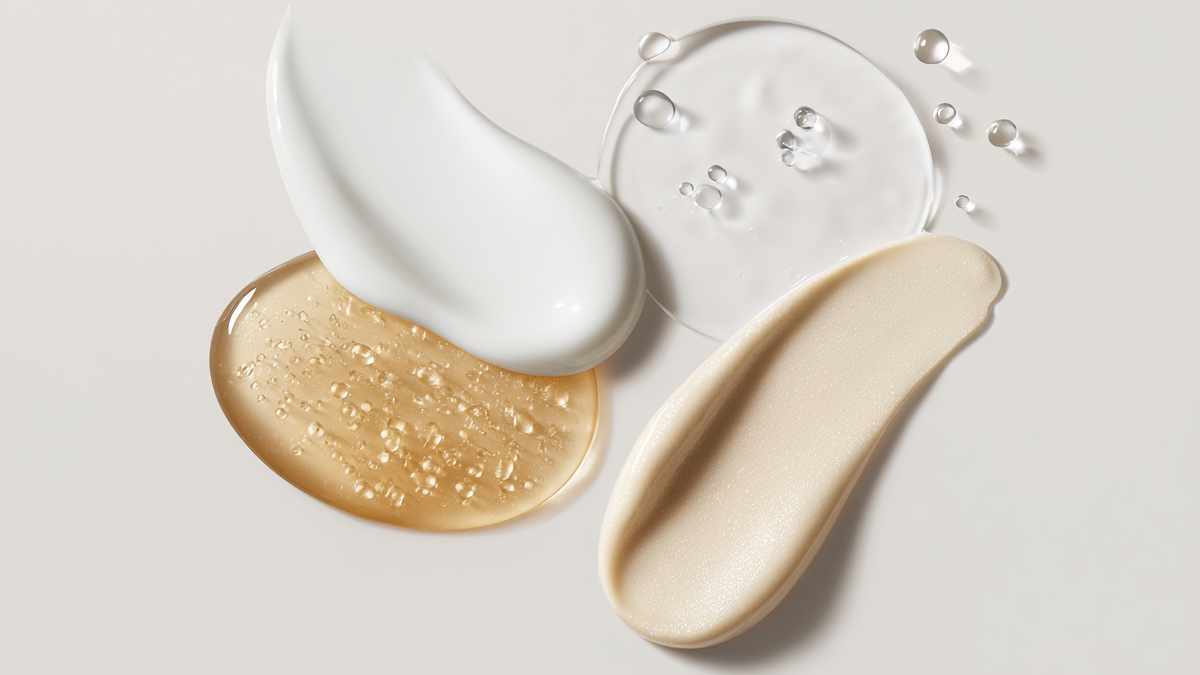
A less-discussed axis of difference is the relationship between product texture and skin tone communication. This requires some directness about cultural context.
Korean skincare culture places high value on a specific skin aesthetic that Korean dermatologists and beauty researchers have written about extensively — sometimes using terms like “translucency” or, in more academic contexts, the concept of 맑은 피부 (maelkn pibu, clear/bright skin). This aesthetic ideal is not simply about absence of blemishes; it relates to the light-reflective quality of skin that is well-hydrated at multiple layers, uniformly toned, and minimally textured.
Korean skincare formulations — particularly the layering of multiple lightweight watery products — are partly designed to produce and maintain this specific quality of light interaction with the skin surface. The pursuit of this aesthetic has driven formulation innovation in the Korean skincare industry in ways that have had real scientific benefits: the development of multi-molecular-weight hyaluronic acid, the refinement of fermented ingredient processing, the investment in centella asiatica standardisation.
European skincare aesthetics differ, and the difference is more than superficial. Northern European beauty ideals have historically centred different qualities: evenness over brightness, health over translucency, low-maintenance over cultivated. The practical effect on product development is that European formulations tend toward heavier, longer-lasting textures — products designed to require less frequent application. The layering logic of Korean skincare is not optimised for this preference.
This matters for product selection. If you are using Korean skincare as a European person, you are working across a formulation logic built for a different set of aesthetic priorities and a different climate. The products work, but they work differently — and understanding that difference helps avoid the frustration of a Korean routine that performs well in Korean weather but behaves otherwise in 60% winter humidity and below.
Fermentation: Where the Two Traditions Actually Overlap
One area where Korean and European skincare traditions share more than is usually acknowledged is fermentation.
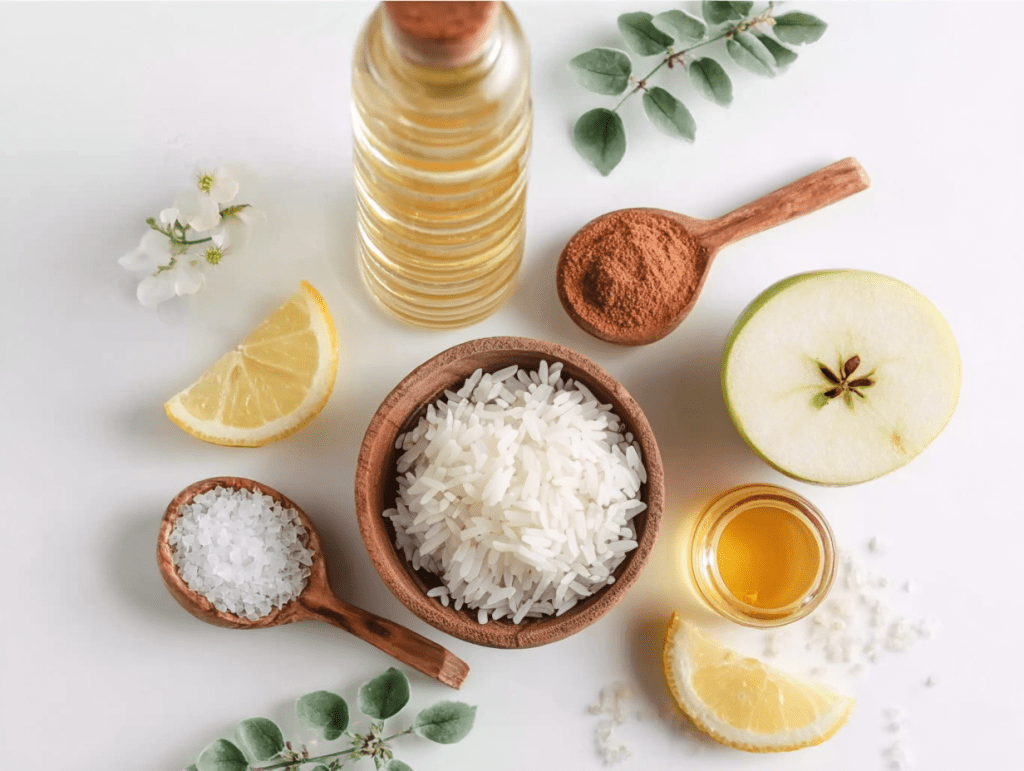
Korean skincare’s use of fermented ingredients — fermented rice water, fermented soybean (galactomyces ferment filtrate), fermented Lactobacillus — connects to a broader tradition of fermented food culture (doenjang, kimchi, ganjang) and their association with health and longevity in Korean traditional medicine. The bioavailability of certain nutrients in fermented forms, and the probiotic properties of fermentation byproducts, have been subjects of Korean cosmetic research for decades.
European cosmetic tradition also has fermented ingredients, though they are less prominent in mainstream product marketing. French skincare’s use of vinegar-based toners (vinaigre de toilette) has centuries of practice behind it. The Alpine tradition of using fermented whey (molke) topically on skin — still practiced in parts of Switzerland and Austria — is not aesthetically dissimilar from Korean rice ferment water. German pharmacy brands have increasingly incorporated Lactobacillus ferment filtrate into their moisturiser lines.
The convergence here is genuine and is being driven by microbiome research on both sides. For a European person evaluating Korean skincare ingredients, fermented components are among the less foreign — the underlying logic of using fermentation to increase bioactivity and reduce irritation potential maps onto a European tradition that simply has not been as commercially prominent.
Actives: Different Concentrations, Different Assumptions
Perhaps the most practically important philosophical difference is in the use of active ingredients.
Korean skincare culture tends to use lower concentrations of actives over longer periods. A 0.2% retinol product used for twelve months is a different proposition than a 0.5% retinol product used for four months — and Korean product development generally favours the former. This is consistent with the preventive, maintenance-oriented philosophy: lower impact on the barrier, longer accumulation of benefit.
European clinical skincare — and North American skincare, which has significantly influenced the European market — tends toward higher concentrations for faster visible results. This is consistent with the responsive philosophy: if a problem exists, address it decisively.
Neither approach is wrong for all skin types, but the two do not mix intuitively. Using high-concentration European actives alongside multi-step Korean maintenance products can result in more barrier disruption than either product was designed to cause individually — the Korean products are buffering for a lower-impact active load than what a European retinoid or acid treatment delivers.
The practical implication: if you are using Korean skincare as your base routine and adding European actives (retinoids, prescription-level niacinamide, high-percentage AHAs), the barrier support from the Korean products becomes more important, not less. The ceramide and HA layers are doing real work to offset the increased TEWL from more aggressive European actives.
What This Means for a Mixed Routine
Most Europeans who use Korean skincare do not use a purely Korean routine or a purely European one. They mix. This is not a problem — it is an opportunity to use the strengths of both traditions deliberately.
The most functional approach treats Korean products as the infrastructure layer — the hydration, the barrier maintenance, the long-term preventive work — and European actives as the targeted intervention layer when needed. It also means applying European anti-ageing or corrective products less frequently than Korean layering products, because they are working on a different timescale and with a different level of skin disruption.
Concretely: a Korean hydrating toner, a Korean HA serum, and a Korean ceramide moisturiser used daily, with a European retinoid or AHA treatment used two to three times weekly as an additional step, is a more coherent mixed routine than alternating between two completely different product philosophies day by day.
Frequently Asked Questions
**Is the 10-step Korean routine actually necessary?**
No. The number of steps is a product of consumer culture and product proliferation, not a scientifically optimised protocol. The underlying principle — layering from thinnest to thickest, with hydration before barrier sealing — is sound and applicable in three steps or seven.
**Is Korean skincare more suitable for Asian skin than European skin?**
Skin biology is more uniform across populations than skincare marketing suggests. The relevant variables are skin type (dry, oily, combination, sensitive), not ethnicity. Korean skincare products are well-suited to dry or sensitive skin in European climates precisely because many were developed to address the effects of cold, dry winters — conditions Korea shares with northern Europe.
**Are European skincare brands catching up with Korean formulation?**
In some areas. The adoption of fermented ingredients, multi-weight hyaluronic acid, and barrier-repair formulation logic in brands like La Roche-Posay, Paula’s Choice, and Eucerin reflects genuine learning from Korean formulation innovation. The gap is narrowing, though the innovation cycle in Korean skincare remains faster than most European brands.
**What should a European person look for in Korean skincare labels?**
Look for fragrance-free or low-fragrance formulations — northern European populations show higher fragrance sensitisation rates — and check that any HA product includes emollient ingredients or that you have an emollient ready to apply on top. Beyond that, the ingredient science is the ingredient science. The molecular behaviour of ceramide NP is the same whether you are in Seoul or Stuttgart.
*Cultural and dermatological context informed by Korean Journal of Dermatology references and the Kor Foundation for Skin Research. Filaggrin research: O’Regan et al. (2009), J Allergy Clin Immunol; Palmer et al. (2006), Nat Genet. EU regulatory context from EC 1223/2009. Product recommendations contain affiliate links; purchasing through these links may generate a small commission.*
 JJJOZ BLOG
Leave a comment