
Why Ceramide Concentration Is a Different Problem in Europe
There is a version of skin barrier science that gets repeated endlessly in K-beauty content: ceramides seal the skin, lock in moisture, and everything is fine. It is not wrong, exactly, but it skips the part that matters most if you live in Berlin, Amsterdam, or Copenhagen.
Indoor heating in northern Europe runs from October through April. In a heated apartment in Germany, ambient humidity can drop below 30% — a level typically associated with desert conditions, not Central Europe. Korean skincare is designed for a climate where winter outdoor humidity stays between 40–70%. The products work, but the assumptions embedded in how they are applied often do not travel well.
This post is not a product ranking. It is an attempt to explain what ceramide formulations actually do at the molecular level, how the three main ceramide types differ in function, and which combinations make the most practical sense for skin exposed to chronic low humidity. Product recommendations follow from that analysis, not the reverse.
What the Skin Barrier Is, Precisely
The outermost layer of skin — the stratum corneum — is structured like bricks in mortar. Corneocytes (flattened, protein-rich cells) are the bricks. The lipid matrix surrounding them is the mortar, and ceramides make up roughly 50% of that matrix by weight.
The other two major components are cholesterol (approximately 25%) and free fatty acids (approximately 15%). These three classes of lipids work together to maintain the lamellar bilayer structure — a repeating arrangement that physically prevents transepidermal water loss (TEWL) while regulating what enters and exits the skin.
When TEWL increases — through damage, low humidity, or lipid depletion — the barrier can no longer do its primary job. Skin that “feels dry” is, in most cases, experiencing elevated TEWL before any visible dehydration sets in. Ceramide supplementation through skincare aims to slow this process by reinforcing the lipid matrix from the outside.
The complication is that not all ceramides are the same molecule. There are at least twelve distinct ceramide subclasses identified in human skin, and the ones that appear most consistently in formulations each have different structural roles.
The Three Ceramide Types You Will Actually Encounter
1. Ceramide NP (Non-hydroxy fatty acid / Phytosphingosine)
Ceramide NP is the most common ceramide subclass in the stratum corneum and the one that appears most frequently in skincare formulations. It forms the backbone of the lamellar bilayer and is primarily responsible for the structural cohesion of the barrier.
In European winter conditions, this is the ceramide that depletes most noticeably. Repeated exposure to heated dry air accelerates the rate at which the lipid matrix turns over — the skin sheds ceramide NP faster than it can synthesise it. Formulations that list ceramide NP (or ceramide 3, the older naming convention) in the first half of the ingredient list are replacing what has been lost.
One product that applies this well: **Aestura Atobarrier 365 Cream** uses a five-ceramide complex with ceramide NP as its anchor. The formulation is among the more clinically referenced ceramide products in Korean dermatological literature and is consistently cited on 화해 (Hwahae) in the sensitive skin category.

→ [Check Aestura Atobarrier 365 on Amazon DE]
2. Ceramide AP (Alpha-hydroxy fatty acid / Phytosphingosine)
Ceramide AP is a structurally distinct subclass that sits within the lamellar bilayer in a slightly different orientation from ceramide NP. It plays a role in the skin’s ability to retain water between cells — not by forming a physical barrier in the way NP does, but by influencing how tightly the lamellar layers pack together.
In formulation terms, ceramide AP often appears alongside NP precisely because their combined presence more closely mirrors the composition of healthy skin than either ceramide alone. The Aestura complex includes both, as does the COSRX Balancium Comfort Ceramide Cream.
Ceramide AP is also involved in regulating skin pH. The stratum corneum maintains an acidic surface pH of approximately 4.5–5.5 — sometimes called the “acid mantle” — and this acidity is essential for the enzymes that process lipid precursors into ceramides. Products that include ceramide AP without disrupting surface pH are therefore doing two things at once: delivering ceramides directly and maintaining the conditions under which the skin can produce more.
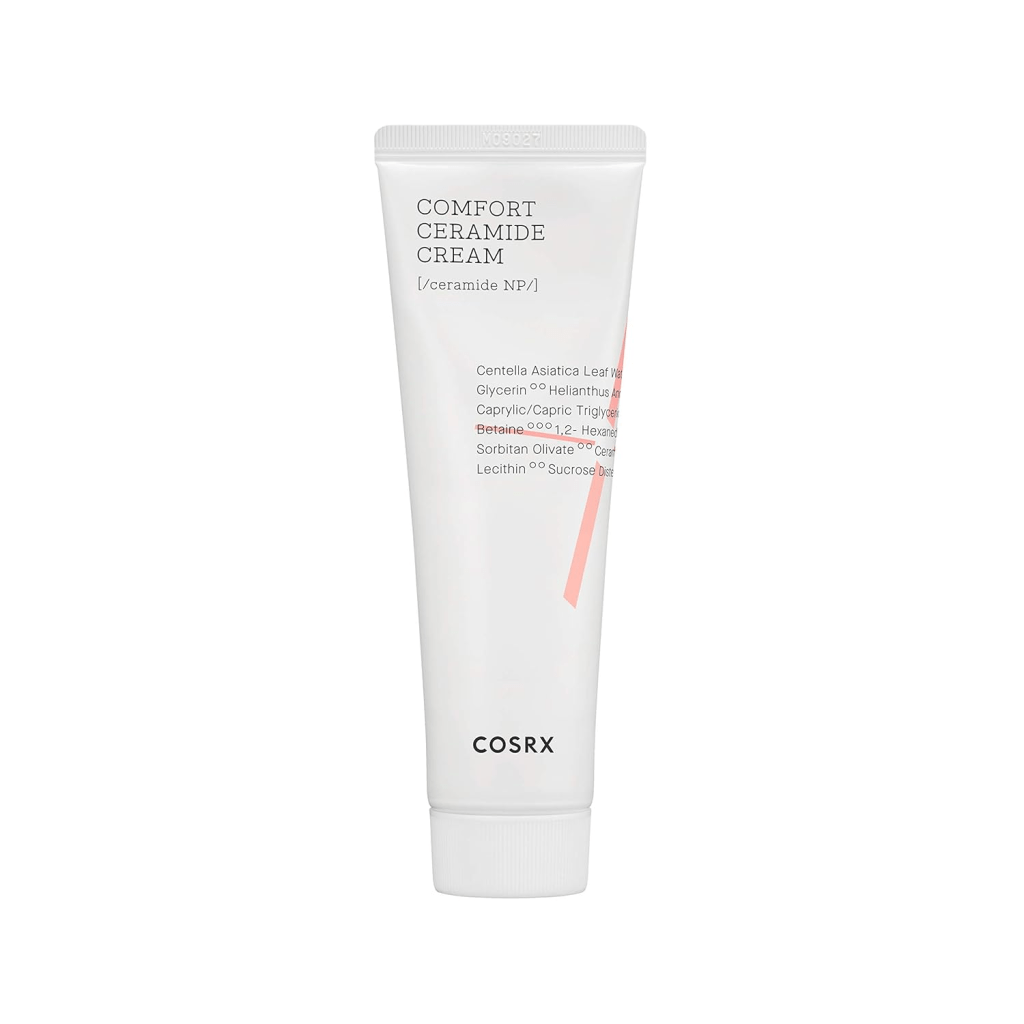
→ [Check COSRX Balancium Comfort Ceramide Cream on Amazon DE]
3. Ceramide EOP (Esterified Omega-hydroxy fatty acid / Phytosphingosine)
Ceramide EOP is the least discussed of the three and arguably the most structurally unusual. Unlike NP and AP, ceramide EOP is covalently bound to the corneocyte surface — it is literally attached to the cell, not floating in the lipid matrix between cells.
Its role is to serve as the scaffold on which the lamellar bilayer is organised. Without adequate ceramide EOP, the other ceramides cannot pack into their correct repeating structure, which means that a formulation heavy in NP and AP but light in EOP may be delivering the right molecules in the wrong configuration.
In practice, formulations that include all three ceramide types are significantly rarer than those that include one or two. **Dr. Jart+ Ceramidin Cream** is one of the more widely available products with a documented ceramide complex that includes EOP. It is more occlusive than the Aestura product, which makes it better suited for nighttime use under European winter conditions than as a daytime moisturiser.
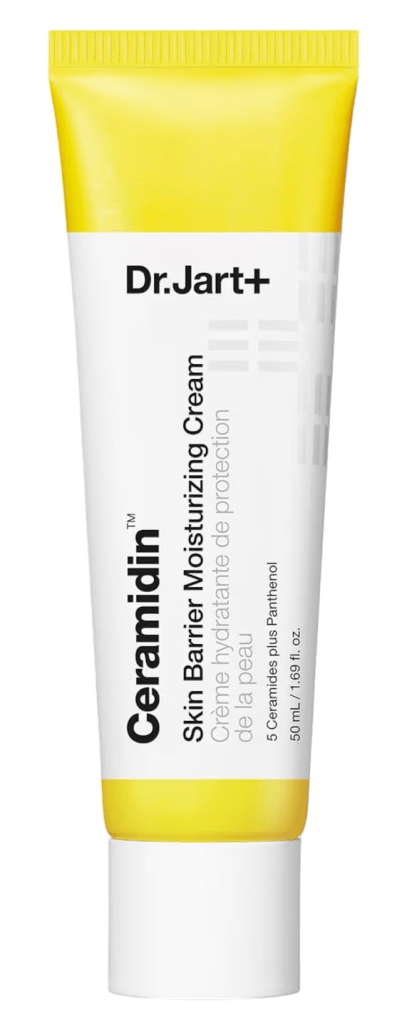
→ [Check Dr. Jart+ Ceramidin Cream on Amazon.de]
How Ceramides Interact with Other Barrier Ingredients
Ceramides are rarely the only relevant ingredient in a barrier-repair formulation. Two additional classes of molecules are worth understanding before buying anything.
**Cholesterol.** The lipid matrix is a three-component system: ceramides, cholesterol, and free fatty acids. Products that deliver ceramides without cholesterol are incomplete — the lamellar bilayer requires all three in something close to their natural ratio. The ratio that appears most often in dermatological research is 3:1:1 (ceramides:cholesterol:free fatty acids). When you see “phytosterols” or “cholesterol” listed in a formulation alongside ceramides, this is why they are there.
**Fatty acids.** Linoleic acid and palmitic acid are the free fatty acids most relevant to barrier repair. Linoleic acid deserves specific attention: the skin cannot synthesise it and must obtain it externally, and deficiency in linoleic acid is associated with impaired barrier function regardless of ceramide levels. Products containing plant oils high in linoleic acid — rosehip, sunflower seed, evening primrose — are often described as “barrier-supporting” for this reason, not because they contain ceramides themselves.
**Humectants used with ceramides.** Ceramide products seal in moisture more effectively when there is moisture to seal. Applying a ceramide cream to skin that is already dehydrated achieves significantly less than applying it after a humectant layer — particularly in low-humidity environments where skin is drawing moisture from the deeper dermis rather than from the air. In European winter conditions, applying a hyaluronic acid serum before a ceramide moisturiser is not optional styling; it is part of how the formulation is intended to function.
Which Ceramide Products Work Best in Northern European Conditions
The following is not a ranking. It is a framework organised by use case and barrier profile.
* If your primary concern is TEWL without visible flaking:
Aestura Atobarrier 365 Cream. The ceramide concentration is high enough to be functional, the texture is appropriate for layering under SPF, and it has the most consistent user data of any product in this category across both Korean and international review platforms.
* If you need both ceramides and anti-inflammatory support:
Dr.G Red Blemish Clear Soothing Cream. The formulation combines ceramides with centella asiatica derivatives — specifically madecassoside — which has documented efficacy in reducing inflammatory markers associated with barrier disruption. It functions as both a barrier replenisher and a calming treatment.

→ [Check Dr.G Red Blemish on Amazon.de]
* If you need a nighttime occlusive:
Dr. Jart+ Ceramidin Cream. The heavier texture is not ideal under makeup but is appropriate as the final step in a PM routine during cold months.
*If you have combination skin (oily T-zone, tight cheeks):
COSRX Balancium Comfort Ceramide Cream. Lighter in weight than the Jart+ product, with a texture that does not cause congestion on the nose and forehead while still delivering adequate ceramide concentration to drier areas.
A Note on EU Regulation and Ceramide Claims
The EU Cosmetics Regulation (EC 1223/2009) does not specifically restrict ceramide claims, but it does govern the distinction between cosmetic and medicinal claims. A product cannot legally claim to “repair” or “heal” a skin condition in the EU — it can claim to “help improve the appearance of the skin barrier” or “support the skin’s natural barrier function.”
This is not just legal boilerplate. It means that Korean products marketed in Korea with explicit barrier-repair claims may carry modified labelling when distributed in the EU. The formulation is identical; the claim on the packaging changes. If you are purchasing from a Korean retailer shipping to Germany, you are buying the same product with Korean-market packaging, which may include claims that would be impermissible on EU-market products. The ingredients are the same. The regulatory status is not.
You can verify any ceramide listed in a product against the **CosIng database** — the EU’s official cosmetic ingredient register — if you want to confirm both the approved INCI name and any associated usage restrictions.
Frequently Asked Questions
**Do ceramide products expire faster than other moisturisers?**
Ceramide molecules are relatively stable, but formulations that also contain fatty acids can go rancid if stored in warm environments. Store ceramide creams away from direct sunlight and heat sources. The shelf life after opening is typically 12 months (indicated by the open jar symbol on packaging).
**Can I use a ceramide product if I already use a retinol?**
Yes, and it is often worth doing. Retinoids accelerate cellular turnover and temporarily increase TEWL, which makes the skin more susceptible to dryness. A ceramide product used in the same routine — typically applied after retinol has absorbed — partially offsets this effect.
**Is ceramide NP the same as “ceramide 3” on older labels?**
Yes. The INCI naming convention for ceramides was updated in 2013. Ceramide NP was formerly listed as ceramide 3; ceramide AP was ceramide 6-II; ceramide EOP was ceramide 9. Both naming systems remain in use.
**Do vegan ceramide formulations work the same as those using animal-derived ceramides?**
Most modern ceramide formulations use plant-derived phytosphingosine as the base, which is structurally similar to the sphingosine in human skin ceramides. The functional difference in most published studies is minimal. Products marketed as “vegan” in this context are typically using phytosphingosine or sphingosine derived from plant sources — this is already the industry standard, not a reformulation.
**Why does my ceramide cream pill under SPF?**
Ceramide formulations are typically emollient-heavy. Pilling occurs when an emollient layer has not fully absorbed before another product is applied on top. Waiting 2–3 minutes after applying your ceramide moisturiser before applying SPF usually resolves this. If pilling continues, consider switching to a lighter ceramide serum rather than cream under SPF, and using the cream only in the PM routine.
*Ingredient information referenced against INCI Decoder and CosIng EU database. Clinical references from PubMed/NCBI. Product availability and affiliate pricing are subject to change.*
*This post contains affiliate links. If you purchase through these links, I may earn a small commission at no additional cost to you.*


 JJJOZ BLOG
Leave a comment