
If you’ve ever moved to Central or Northern Europe from a more humid climate — or simply noticed your skin behaving differently in winter — you already know what low humidity does to your face. The air in Germany, the Netherlands, or Austria between October and April is not just cold. It’s desiccating. Indoor heating makes it worse. The result is a weakened skin barrier, transepidermal water loss (TEWL), and that familiar tight, reactive feeling that no amount of drinking water seems to fix.
Korean skincare has developed a specific answer to this problem — not because Korean formulators anticipated the European climate, but because Seoul winters share more with Berlin winters than most people expect: dry, cold air, heavy heating indoors, and skin that needs barrier support rather than just surface moisture.
This guide focuses on five Korean moisturizers selected for their ingredient profiles, not their packaging or brand recognition. Each product is assessed based on what its active ingredients actually do at the skin barrier level — so you can decide whether a formula is worth buying before you commit.
Why European Climate Is a Specific Skincare Challenge
Central European air humidity in winter regularly drops below 30–40% indoors. At this level, the skin’s natural moisturizing factors (NMF) — the water-binding components in the outermost layer of the epidermis — begin to deplete faster than they can replenish.
The result is a compromised stratum corneum: the skin becomes more permeable, loses moisture faster, and reacts more intensely to environmental irritants like pollen, pollution, and hard water. For those with an already-sensitive or reactive skin type, this cycle can escalate into persistent redness, flaking, or eczema-like irritation.
The ingredients most effective at interrupting this cycle are those that work at the barrier level — not just on the surface. That means ceramides (which rebuild lipid structure), occlusive agents like squalane (which reduce water evaporation), and anti-inflammatory actives like Centella Asiatica (which calm the immune response triggered by barrier disruption). These are not trend ingredients. They are well-documented in dermatological research and form the backbone of the most effective Korean moisturizers for this skin context.
How to Read This Guide
Each product below is organized around two questions: what are the key active ingredients, and what do they specifically do for a compromised barrier in a dry climate? Products are not ranked — they address slightly different needs within the same category.
A note on sourcing: all five products are available through international retailers that ship to Europe. Affiliate links are included where available — these are products selected on formulation merit, not sponsorship.
Barrier Repair: Ceramide-Forward Formulas
1. Aestura Atobarrier 365 Cream
Key ingredients: Ceramide NP, Ceramide AP, Ceramide EOP, Niacinamide, Panthenol

Aestura is a Korean dermocosmetic brand with clinical positioning — their Atobarrier line is designed around atopic skin, which means it’s formulated for exactly the kind of chronically disrupted barrier that European winters cause in sensitive skin types.
The ceramide complex in this cream covers three of the primary ceramide types present in healthy skin (NP, AP, EOP), which matters because ceramides don’t function in isolation — they work in a specific ratio with cholesterol and free fatty acids to form the lamellar structure of the stratum corneum. A formula with multiple ceramide types is more likely to support genuine barrier reconstruction than one with a single ceramide.
Niacinamide at a functional level (typically 2–5% in this type of formulation) reduces transepidermal water loss and has anti-inflammatory properties relevant for redness-prone skin. Panthenol supports healing and has a calming effect on reactive skin.
Best for: Skin that becomes consistently reactive in winter, atopic tendency, eczema-adjacent conditions. Texture: Medium-weight cream, not greasy. Works well under SPF.
→ [Check availability on on Amazon DE]
2. Dr.G Red Blemish Clear Soothing Cream
Key ingredients: Centella Asiatica Extract, Beta-Glucan, Madecassoside, Allantoin

Dr.G sits at the intersection of dermatology and daily skincare — the brand was developed with dermatological input and the Red Blemish line is their best-known formula for sensitive, reactive skin.
What distinguishes this cream is the combination of Centella Asiatica extract and isolated Madecassoside. Centella Asiatica as a full extract contains a range of active compounds (asiaticoside, asiatic acid, madecassic acid, and madecassoside). Madecassoside in isolation is the component most associated with anti-inflammatory activity and wound healing support. Using both means the formula covers a broader spectrum of the plant’s calming properties.
Beta-glucan is an underrated ingredient in barrier repair — it forms a breathable film on the skin surface that reduces sensitivity to environmental triggers while also stimulating the skin’s own repair mechanisms. In the context of European climate exposure (wind, cold, pollution), this is a functionally useful addition.
Best for: Skin prone to redness, reactivity after weather exposure, post-barrier-disruption recovery. Texture: Light-to-medium cream. Suitable for combination-sensitive skin types.
→ [Check availability on Amazon DE]
Occlusive Support: Squalane-Based Hydration
3. S.Nature Aqua Squalane Moisturising Cream
Key ingredients: Squalane, Sodium Hyaluronate, Glycerin, Adenosine

Squalane is one of the few ingredients that works as both an emollient and a light occlusive — it softens and smooths the skin surface while also forming a thin barrier that slows transepidermal water loss. Unlike heavier occlusives (petrolatum, shea butter), squalane is non-comedogenic and has a texture that works in layered routines.
The version of squalane used in most current Korean formulations is plant-derived (typically from sugarcane or olives), which also addresses the EU consumer concern about ingredient origin.
Sodium hyaluronate — the salt form of hyaluronic acid — draws moisture from the environment into the skin. In humid conditions this works very well; in dry European conditions, it needs to be paired with an occlusive ingredient to prevent it from drawing moisture out of the skin instead. Squalane fills that role here, which is why this pairing is specifically functional in dry climates.
Best for: Dry skin that needs hydration without heaviness, layered routines, first squalane experience. Texture: Lightweight gel-cream. Fast absorbing.
→ [Check availability on Amazon.de]
Targeted Repair: Cica Complex Serums
4. Dr. Jart+ Cicapair Intensive Soothing Repair Serum
Key ingredients: Centella Asiatica Leaf Water, Madecassoside, Allantoin, Panthenol

Dr. Jart+ is one of the few Korean skincare brands with consistent international distribution, including in Douglas stores across Europe. The Cicapair line has significant clinical documentation behind it and has been studied in the context of post-procedure skin recovery — which makes it one of the better-evidenced options in this category.
This serum functions as a pre-moisturizer repair step. The Centella Asiatica leaf water as a base (rather than regular water) means the anti-inflammatory compounds are present throughout the formula rather than concentrated in a single extract. Madecassoside at a meaningful concentration supports the skin’s own collagen production and reduces inflammation signaling.
Allantoin has keratolytic properties at higher concentrations but at the levels used in serums, it primarily functions as a soothing agent that supports cell turnover without irritation.
Usage note: In a layered routine, this works best applied before a ceramide-based cream (such as Aestura above), not instead of it. Serums address acute inflammation; creams rebuild structural integrity.
Best for: Reactive skin needing both immediate calming and medium-term repair. Useful after travel, season transitions, or harsh weather exposure.
→ [Check availability on Amazon DE]
Immediate Soothing: Gel Formats for Reactive Skin
5. Aromatica Soothing Aloe Vera Gel
Key ingredients: Aloe Barbadensis Leaf Juice (99%), Allantoin, Centella Asiatica Extract
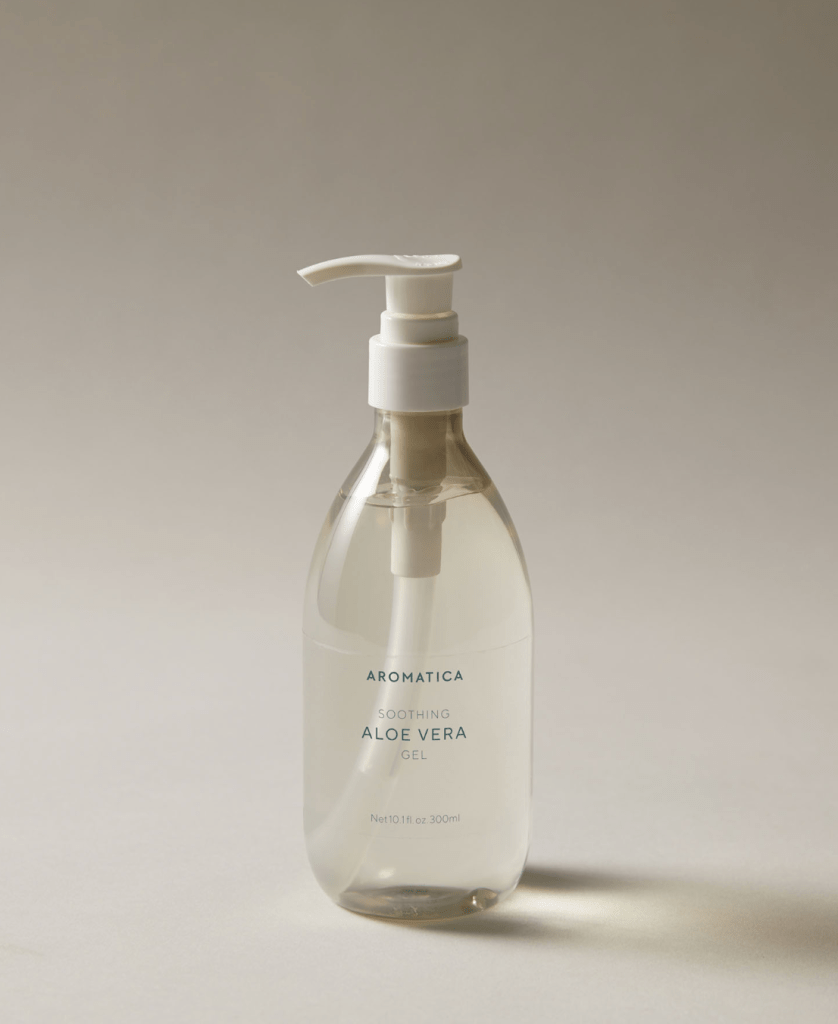
Aromatica is a Korean brand with a certified organic and clean formulation positioning — relevant for EU consumers who cross-reference ingredients against the EWG database or similar tools.
This gel is listed last not because it’s least effective, but because it serves a different function from the four creams above. Aloe vera gel is not a primary moisturizer for very dry skin — it’s a soothing layer that calms inflammation and adds light hydration in the short term. At 99% aloe concentration, this is one of the cleaner versions on the market.
Its most practical use case in a European climate context is as a first-response product when skin becomes acutely reactive — after sun exposure, after wind exposure, or as a cooling layer under SPF in warmer months. It can also be refrigerated for additional relief effect.
Best for: Supplementary soothing, not primary moisturization. Best paired with a cream on top in dry conditions. Texture: Light gel, fast absorbing. Not sufficient alone in low-humidity environments.
→ [Check availability on Amazon.de]
How to Layer These Products
For a dry European climate, the most effective approach is a two-step moisture layer rather than a single heavy cream.
Step 1 — Repair/Soothe: Dr.Jart+ Cicapair Serum or Dr.G Red Blemish Cream (depending on whether your primary concern is inflammation or barrier repair)
Step 2 — Seal: Aestura Atobarrier 365 Cream or S.Nature Squalane Cream (depending on whether your skin needs ceramide reconstruction or lighter occlusive sealing)
The Aromatica gel fits best as a step between toner and serum when skin is acutely reactive, or as a standalone summer moisturizer.
A Note on EU Ingredient Regulations
All five products above are formulated with ingredients approved under EU cosmetics regulations (EC 1223/2009). Korean skincare brands selling in Europe are required to comply with EU ingredient restrictions, which in some cases are stricter than regulations in other markets. If you’re cross-referencing ingredients against a tool like INCI decoder or CosDNA, all of the actives mentioned here have well-documented safety profiles at the concentrations typically used in skincare formulations.
Frequently Asked Questions
Are Korean skincare products available to buy in Germany? Yes. YesStyle, Stylevana, and Amazon DE all carry Korean skincare brands with EU-compliant shipping. Douglas Germany has expanded its Korean skincare range significantly in recent years and carries brands like Dr. Jart+ in-store and online.
Is squalane safe for sensitive skin? Squalane has a very low sensitization profile and is generally well-tolerated by sensitive skin types. It is non-comedogenic and doesn’t contain common allergens. If you have a known sensitivity to specific plant-derived ingredients, check whether your brand uses sugarcane-derived or olive-derived squalane.
What is the difference between Centella Asiatica extract and Madecassoside? Centella Asiatica extract contains the full range of the plant’s active compounds. Madecassoside is one specific compound isolated from Centella, associated primarily with anti-inflammatory activity and barrier repair. Products with both — like Dr.G’s formula — tend to offer broader coverage.
Do Korean moisturizers work differently in European vs. Asian climates? The active ingredients work the same way regardless of geography. What changes is which ingredients are most relevant. In humid climates, hyaluronic acid and lightweight gels are effective. In dry European climates, those same ingredients need to be combined with occlusives and barrier-repair components to prevent moisture loss. The products in this guide are selected with that specific context in mind.
Are there Korean sunscreens safe for use in Europe? This is a separate topic worth its own guide — the short answer is yes, but the regulatory differences between Korean and EU sunscreen ingredient lists mean not all Korean sunscreens are available in Europe, and those that are may have reformulated versions. [→ See our guide on Korean sunscreens in Europe]
*This post contains affiliate links. If you purchase through these links, I may earn a small commission at no additional cost to you.*
 JJJOZ BLOG
Leave a comment