
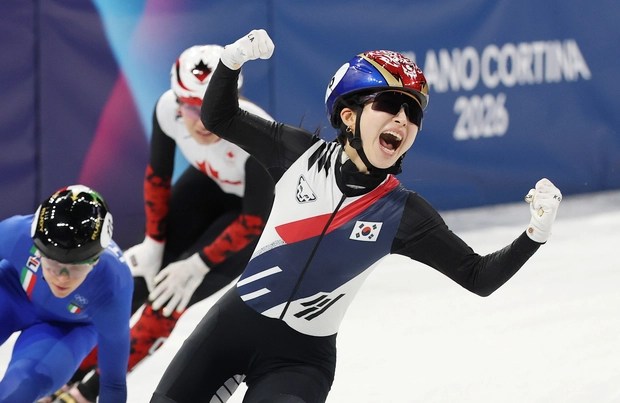
40 Years of Dominance, Proven Once Again at Milano 2026
February 18, 2026. The ice at Milano Ice Skating Arena crackles under the blades of four skaters chasing history. In the closing laps of the women’s 3000m relay final, Choi Min-jeong threads through an impossibly tight inside lane to steal the lead — then hands off to Kim Gil-li, who refuses to let anyone past her. The clock stops at 4:04.014. South Korea crosses the line first, ahead of Italy and Canada, and the arena erupts.
Turin 2006. Milano 2026. Exactly twenty years apart, on the same Italian soil, South Korea has done it again.
From Zero to Dynasty: The Rise of Korean Short Track
Korea’s short track story doesn’t begin with triumph. In 1983, the country sent two skaters — one male, one female — to the World Championships in Tokyo. Neither was actually a short track athlete; they were speed skaters drafted at the last minute. Both were eliminated in the preliminary rounds.
Two years later, in 1985, the Korean national team was formally established for the first time, after the Taereung National Training Center converted an indoor swimming pool into an ice rink. That makeshift facility was where a dynasty was born.
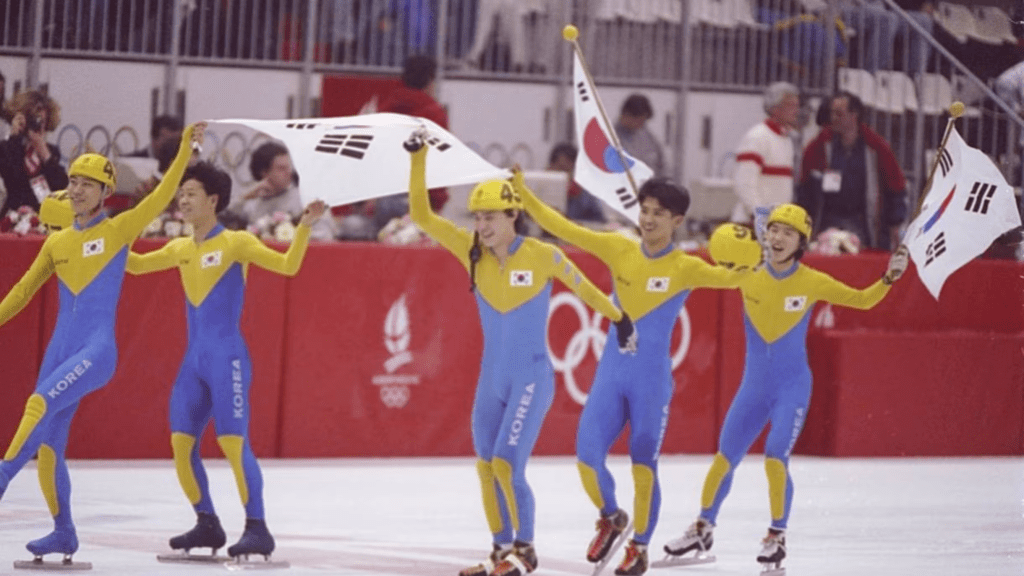
The first spark came at the 1988 Calgary Olympics, where short track made its debut as a demonstration sport. Korea won two gold medals and caught the world’s attention. Four years later, when short track became an official Olympic discipline at the 1992 Albertville Games, Kim Ki-hoon won Korea’s first-ever Winter Olympic gold medal. From that moment on, the trajectory was unmistakable: just as archery defines South Korea at the Summer Olympics, short track became its undisputed winter identity.
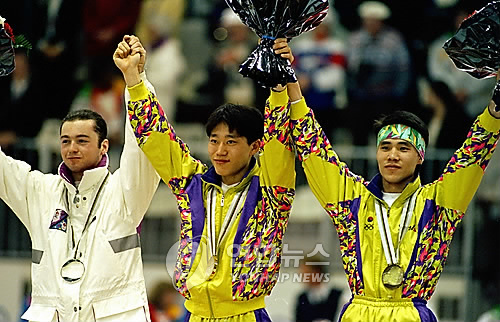
The numbers that followed are staggering. From 1992 to 2022, South Korea claimed 26 of the 65 available Olympic gold medals in short track — approximately 40% of all gold medals ever awarded in the sport. Add in 16 silvers and 11 bronzes, and Korea accounts for 53 of 195 total Olympic medals, or 27% of all short track medals in history, won by a single nation.
The peak of that dominance came at the 2006 Turin Games, where Ahn Hyun-soo and Jin Sun-yu each swept three individual gold medals. Between them, Korea claimed 6 of the 8 available gold medals at a single Olympics — a feat that may never be matched.
Why Is Korea So Dominant?
Biomechanics. Short track is raced on a tight 111-meter oval, demanding explosive cornering ability. Skaters with lower centers of gravity — typically shorter athletes — face less centrifugal force pulling them outward. Korean athletes, generally smaller in build than their European counterparts, have a natural structural advantage on the curves.
Tactical mastery. Korea developed a signature race strategy: hang back in the early stages, read opponents’ movements, then strike with a precise inside or outside overtake in the final laps. This style, honed over decades, turned every race into a chess match that Korean athletes consistently won.
A relentless talent pipeline. Year after year, Korea produces young skaters who dominate junior world championships before seamlessly transitioning to senior dominance. The coaching system, built over 40 years of accumulated knowledge, ensures continuity that no other nation has replicated.
World Championship records. Of the 44 World Championships held between 1976 and today, Korean men have won 18 times and Korean women 15 times. Both are all-time records by a significant margin.
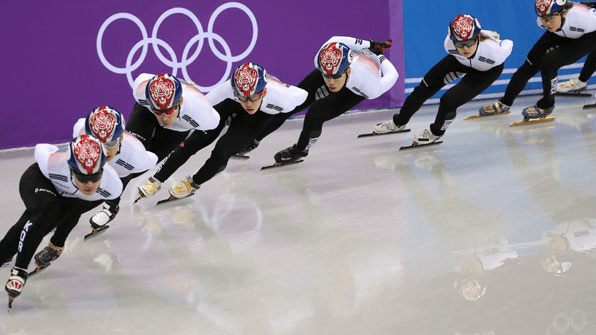
The Women’s 3000m Relay: Korea’s Most Prized Tradition
If short track is Korea’s kingdom, the women’s 3000m relay is its throne room. No other event encapsulates the team’s identity more than this one.
Korea won four consecutive Olympic titles from 1994 (Lillehammer) through 1998 (Nagano), 2002 (Salt Lake City), and 2006 (Turin). The streak was controversially broken in 2010 when the team was disqualified at Vancouver under disputed circumstances. But Korea bounced back to win again in Sochi 2014 and Pyeongchang 2018, before settling for silver at Beijing 2022.
That Beijing silver, behind the Netherlands, became the fuel for Milano. Across nine Olympic appearances in this event, Korea now holds 7 gold medals and 1 silver — the most decorated relay team in the event’s history.
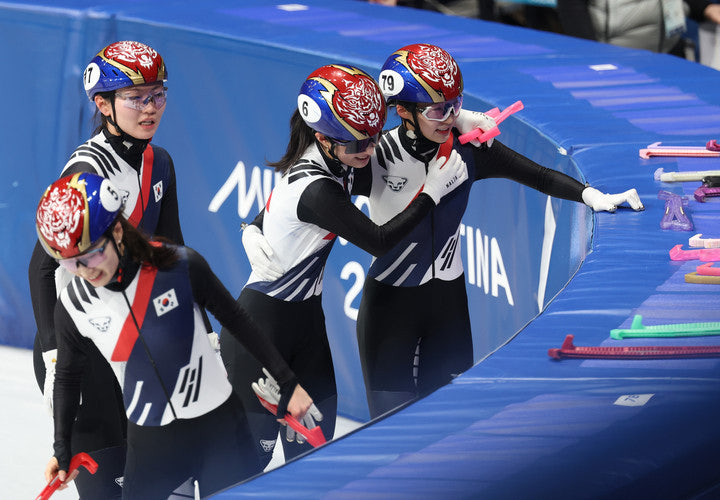
The Gold Medalists
Choi Min-jeong, 28 — The Legend Who Rewrote the Record Books
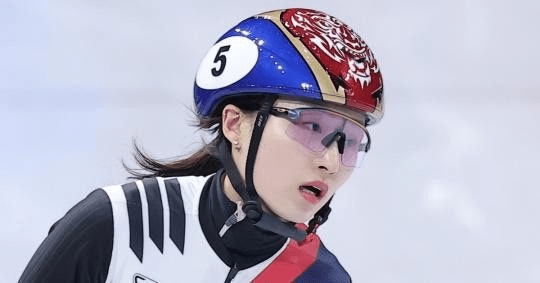
Her nickname is “Ice Princess” — not for any regal quality, but because her face almost never moves. Teammates used to beg her to smile. At the 2015 World Championships, after winning the overall title, she sat at the celebration party so expressionless that her biggest rival reportedly leaned over and asked, “Aren’t you happy?”
That made the moment at Pyeongchang 2018 all the more electric. When Choi crossed the finish line to win the 1500m gold at her first Olympics, she broke into a wide, unguarded smile — and every commentator in the broadcast booth said the same thing: they’d never seen it before.
Choi’s story is not the story of natural genius. Her coaches have said plainly that she was not a physically gifted athlete. She picked up skating at age six on her father’s suggestion, didn’t take it seriously until eighth grade, and only broke through by dramatically increasing her training load in middle school. She was slight. She had limited natural power. She simply refused to be outworked.
In her debut senior season in 2015, she won the World Championship overall title — as a rookie. By the time she arrived in Milano for her third Olympics, her record was one of the most decorated in Korean winter sports history: two golds and a silver at Pyeongchang 2018; one gold and two silvers at Beijing 2022. The Milano relay gold brought her career total to 4 Olympic golds and 2 silvers — 6 medals in all, tying the all-time Korean record for most Olympic medals across both Summer and Winter Games, shared with shooting legend Jin Jong-oh, archery icon Kim Soo-nyung, and speed skater Lee Seung-hoon.
She also tied Jeon Lee-kyung’s record for the most gold medals by a Korean athlete at the Winter Olympics — four.
Before Milano, Choi spent the weeks leading up to the Games reading an Eastern philosophy book recommended by friends, trying to quiet the weight of expectation. “Even the process of emptying your mind requires effort and dedication,” she said. “I’ve been sitting with that idea as I prepare.” In the relay final, as captain of the entire Korean Olympic delegation, she delivered when it mattered most — a razor-sharp inside overtake in the closing laps, before a perfect handoff to Kim Gil-li.
Kim Gil-li, 21 — The Future, Arriving Right Now
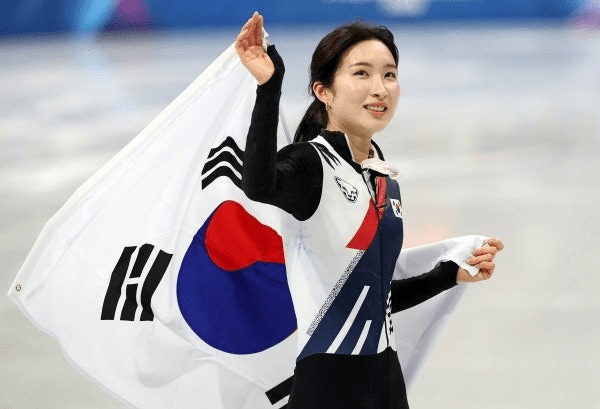
Kim Gil-li’s path to short track was an accident of geography. At age seven, she wanted to learn figure skating after watching a friend skate. But the rink near her home in Seoul didn’t offer figure skating classes. Short track was available. She tried it — and never looked back.
“The thrill of overtaking someone from the inside,” she has said, “that feeling is what kept me here.”
Born in 2004, Kim competed in her first-ever Olympics at Milano — and walked away with two medals. She won bronze in the individual 1000m and anchored the relay team to gold, becoming one of the most talked-about athletes of the Games.
Her rise through the senior ranks was rapid and formidable. In her debut senior season (2022-23), she finished 4th in the overall World Cup standings. The following year, she won the overall World Cup title — earning the Crystal Globe, a prize no Korean woman had ever claimed before. She became the first Korean female short track skater to win it.
But the journey wasn’t without pain. At the 2025 Harbin Asian Winter Games, Kim fell during the relay and cost her team a medal. Inconsolable, she wept in the arms of Choi Min-jeong, who told her quietly: “A relay is never one person’s fault. If we win, we all win. If we fall, we all fall. Don’t carry this alone.” Kim later said: “Racing alongside Min-jeong unnie makes me feel at ease. I can skate freely.” That bond — forged in loss, strengthened through trust — became the invisible foundation of their Milano gold.
In the relay final, she was the last line of defense. After Choi’s lead-stealing overtake, Kim received the handoff and held every challenge off until the finish line. At 21, she is already the present of Korean short track. She will be its future for a decade to come.
Shim Suk-hee, 29 — A Hard Road to a Deserved Ending
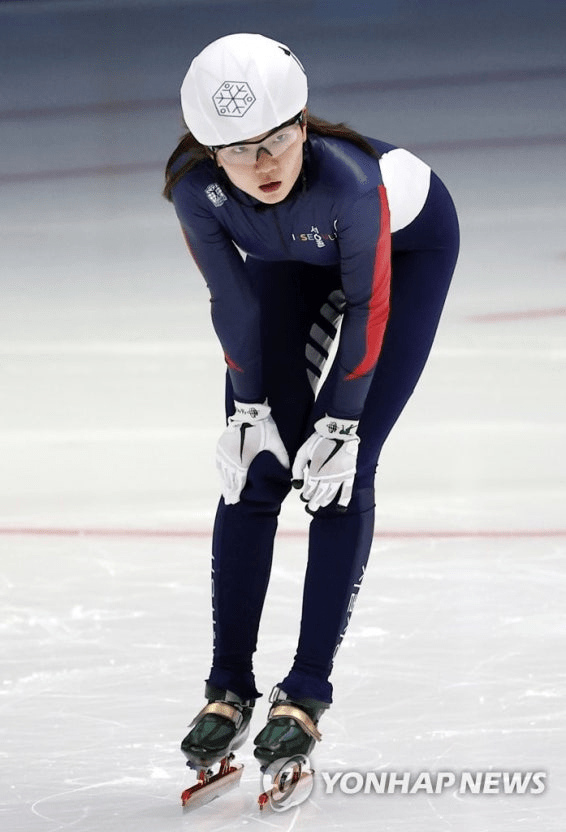
Few athletes in Korean short track history have walked as difficult a path as Shim Suk-hee. Blessed with extraordinary talent, her career was defined as much by adversity as by achievement. She returned to the ice after a period of turmoil and controversy, and in the relay final at Milano, she delivered the powerful push that set up Choi Min-jeong’s decisive overtake — a moment of technical brilliance from a skater who simply refused to let her story end any other way. Closing her major championship career with a gold medal is the kind of ending that only sport can write.
No Do-hee — The Quiet Cornerstone
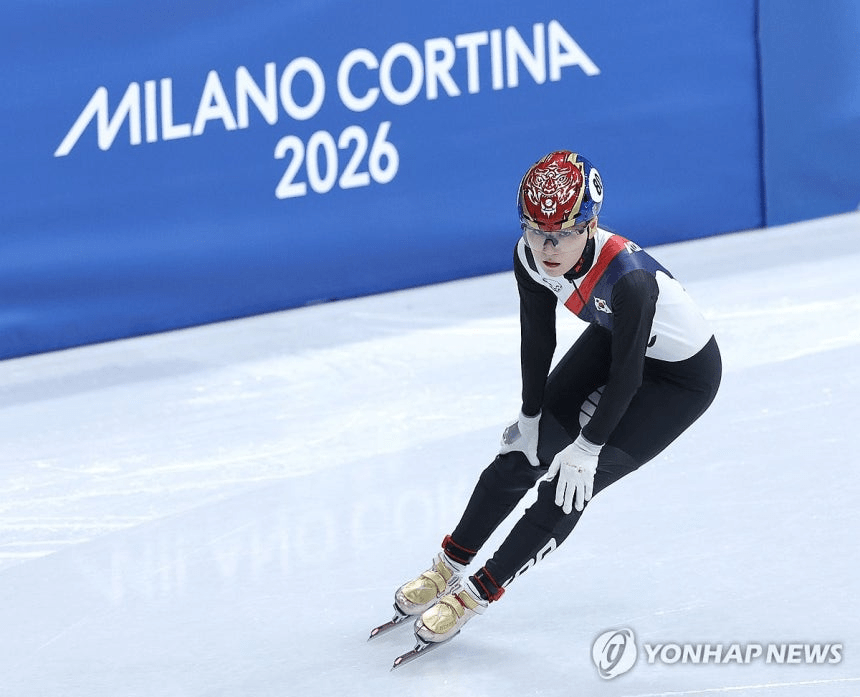
No Do-hee stepped into the relay final as the crucial link between Choi and Kim. Without fanfare, she maintained the team’s rhythm through the mid-race chaos, absorbing pressure so the team’s marquee skaters could perform at their peak. Gold medals belong to four athletes — and this one was no different.
Lee So-yeon — The Veteran Who Set the Stage
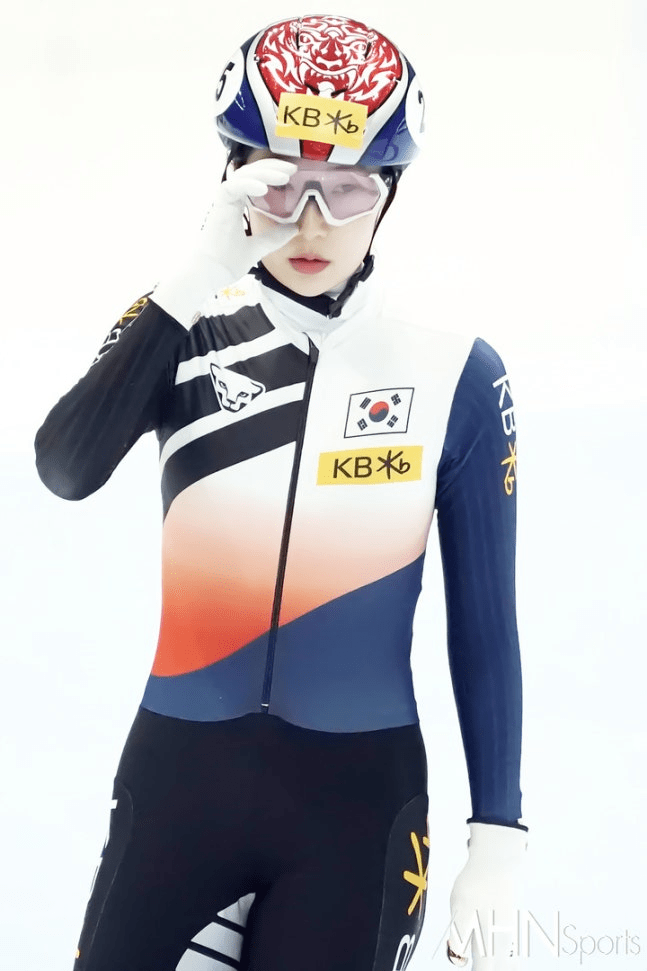
While Lee So-yeon competed in the semifinals rather than the final, her role in the relay campaign deserves recognition. At 33, she is the most experienced member of the squad, and her composed performances in the heats helped Korea advance with confidence and rhythm intact. In relay events, gold is never won in a single race — and Lee’s steady presence across the earlier rounds was a quiet but essential part of what made the final possible.
The Era of Parity — And Why Korea Still Wins
The era of Korean monopoly is over. European athletes have closed the physical gap, and the tactical playbook that Korea used to dominate has long been decoded by rivals. At this very Milano Olympics, Korea went without an individual gold for the entirety of the short track program before the relay. The Netherlands had won relay gold in Beijing. Italy had its greatest crowd in decades roaring behind them on home ice. Canada was dangerous.
None of it mattered in the end.
The Netherlands was forced out of medal contention mid-race. Korea timed its moves with the precision of a team that has been doing this for forty years. Choi struck at the right moment. Kim held at the right moment. The gold was Korea’s.
Turin 2006. Milano 2026. What Comes Next?
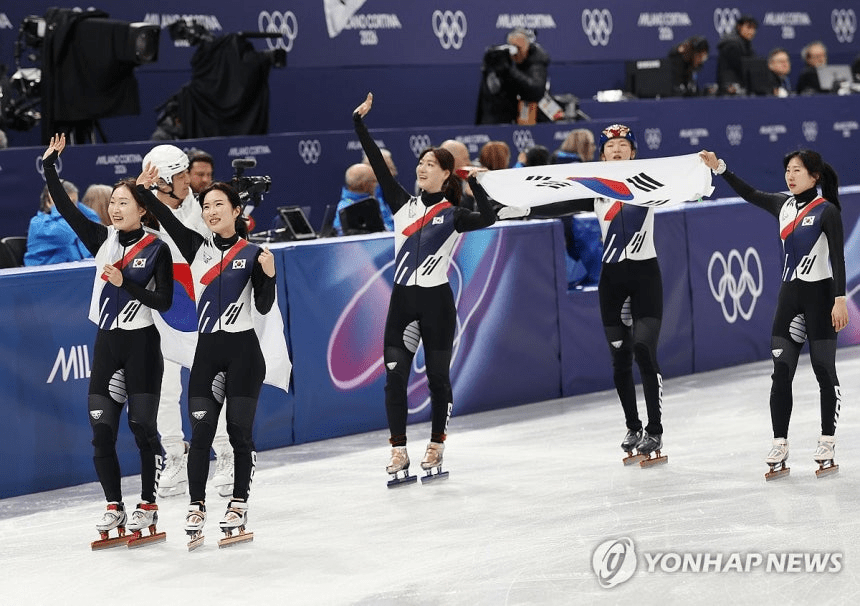
At the 2006 Turin Olympics, Ahn Hyun-soo and Jin Sun-yu swept the short track program on Italian ice, winning 6 of 8 golds in one of the most dominant individual performances the sport has ever seen. Twenty years later, on the same soil, Choi Min-jeong and Kim Gil-li raised the Korean flag again.
History repeated itself. So did the emotion.
Choi leaves Milano having etched her name permanently into Korean sports history. Kim Gil-li leaves having announced herself to the world at the very first attempt. And somewhere ahead of them — in another city, four years from now — the relay baton will be handed off again. If Korean short track history tells us anything, it will be passed with precision.
2026 Milano-Cortina Winter Olympics | Short Track Speed Skating — Women’s 3000m Relay Final 🥇 South Korea — Choi Min-jeong, Kim Gil-li, No Do-hee, Shim Suk-hee | Time: 4:04.014
 JJJOZ BLOG
Leave a comment