
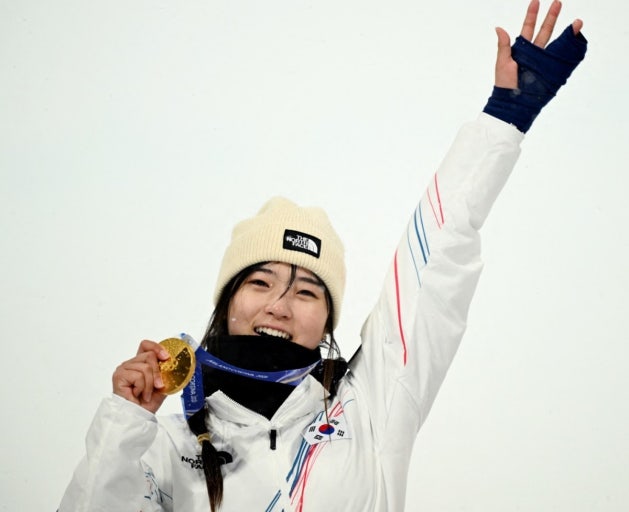
She crashed. She nearly quit. Then she flew.
On February 12, 2026, at the snow-swept Livigno Snow Park in Italy, 17-year-old Choi Gaon made the kind of comeback that only exists in movies — dethroning two-time Olympic champion Chloe Kim to win South Korea’s first-ever Olympic gold medal in snow sports. The moment was so extraordinary that NBC named it one of the Top 10 Best Moments of the 2026 Milano Cortina Winter Olympics.
I’m not a hardcore snowboard fan. I couldn’t explain a cab double cork 1080 if my life depended on it. But I watched that final run five times in a row. And I’m not sure I’ve ever felt that particular mix of disbelief and goosebumps from any sport quite like that.
Here’s everything you need to know about Choi Gaon — and why her story matters.
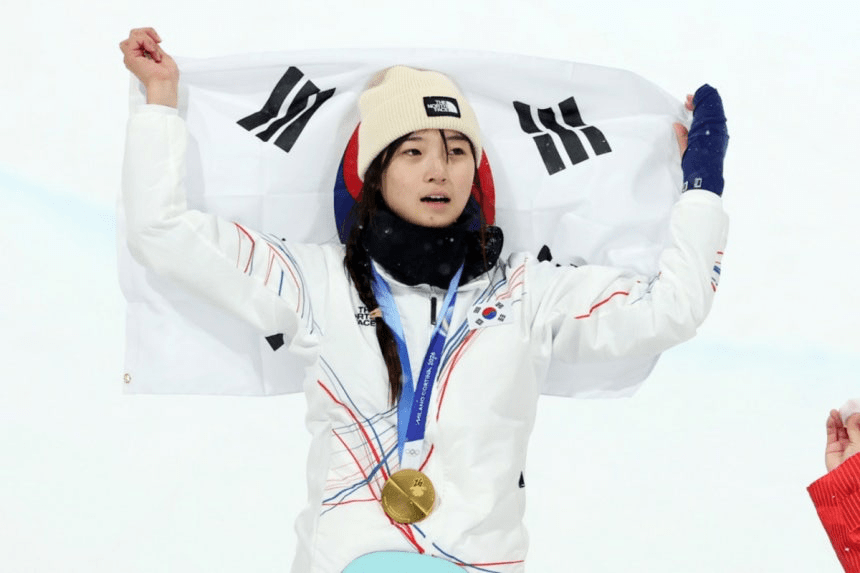
Who Is Choi Gaon? — A Quick Introduction
Full name: Choi Gaon (최가온)
Born: November 3, 2008, Yangpyeong, South Korea
Age at gold medal win: 17 years, 101 days
Event: Women’s Snowboard Halfpipe
School: Sehwa Girls’ High School, Seoul
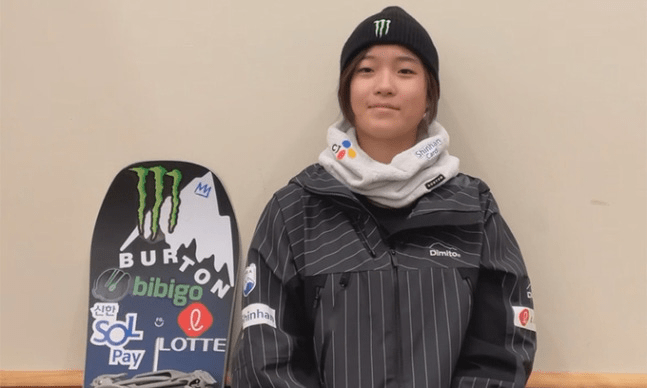
Choi Gaon is a South Korean snowboarder who competes in the halfpipe — a U-shaped snow channel where athletes launch themselves into the air performing aerial tricks. At an age when most teenagers are studying for exams, Gaon was already being called the greatest young snowboarder on the planet.
And as of February 2026, she holds the Olympic gold medal to prove it.
She Wanted to Be the Next Kim Yuna
Before snowboarding, there was figure skating.
Growing up, Gaon idolized figure skating legend Kim Yuna and dreamed of following in her footsteps on the ice. It wasn’t an unusual dream for a Korean child of her generation — Kim Yuna was (and still is) a national icon.
But then her father — an amateur snowboard enthusiast — took her to the slopes. And just like that, the figure skating dream quietly disappeared.
“I was completely absorbed by snowboarding,” Gaon told Olympics.com. “I just forgot about everything else.”
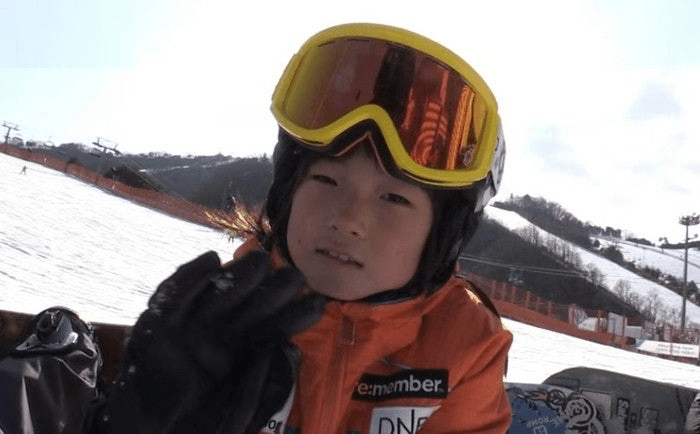
She began riding at age 7 in Yangpyeong, a small city east of Seoul. Her older brother and younger sibling also snowboard, so the family practically lived on the mountain during winters. Her father became not just a supporter but a full-time travel companion and informal coach — showing up at World Cups across Europe and America, waking up at dawn to cook Korean beef for his daughter’s breakfast while other athletes ate cereal.
“Other athletes have bread and cereal in the mornings,” Gaon laughed. “My dad says, ‘You absolutely must eat meat in the morning.’ He wakes up before everyone else to cook.”
The Girl Who Met Chloe Kim in New Zealand — A Decade-Long Bond
Long before Gaon was making headlines, she had a chance encounter that would change her life.
At a youth training camp in New Zealand, a young Gaon was far from home — no mother, no brother, just a coach and a foreign country. That’s when Chloe Kim, already one of snowboarding’s biggest stars, walked over and started a conversation.
“Chloe talked to me a lot when I was little,” Gaon recalled. “Every time I came to camps, she would say, ‘Let’s take a photo together!’ She was so kind to me.”
That connection deepened over the years. Chloe Kim and her father — who himself emigrated from South Korea to the U.S. — took a personal interest in Gaon’s development. They helped bring her to train with the Mammoth Mountain development team in California under coach Ben Wisner, the same program that nurtured Kim herself.
The two families first connected at the 2017 PyeongChang Olympic test event, where Chloe’s father began mentoring Gaon’s father on the ins and outs of elite snowboarding.
Watching Chloe Kim win gold at the 2018 PyeongChang Olympics — in South Korea, on home soil — was the moment that crystallized everything for Gaon.
“I began snowboarding as a child after watching Chloe,” she said. “Seeing her win made me realize how significant the Olympic Games are.”
She was nine years old.
Breaking Records at 14 — The X Games That Shocked the World
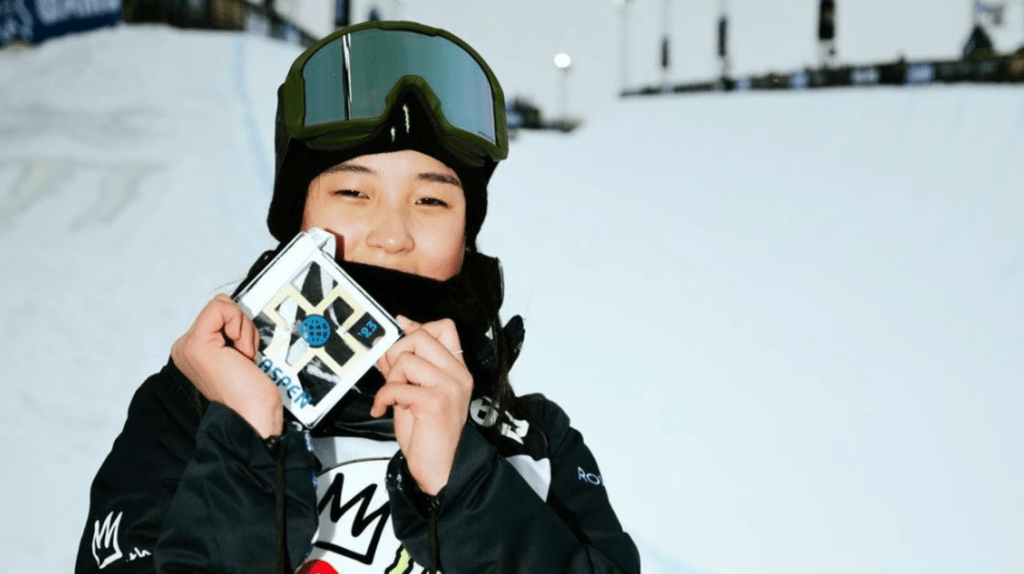
Fast-forward to January 2023. Gaon is 14 years old. The venue is Buttermilk Mountain, Aspen, Colorado — home of the Winter X Games, one of the most prestigious events in extreme sports.
Gaon wins.
Not just wins — she becomes the youngest X Games halfpipe gold medalist in history, breaking the record previously held by Chloe Kim by six months. At 14 years and 3 months, she lands at the top of one of snowboarding’s most storied competitions.
Chloe Kim’s response on social media instantly went viral:
“I feel like a proud mom… The future of snowboarding’s in good hands.”
Suddenly the world had a new name to know.
A Spine Fracture, a Year of Rehab, and a Comeback That Defied Everything
Success was building. Then came January 2024 — and a catastrophe.
At a World Cup training session in Laax, Switzerland, Gaon fractured her spine. She needed surgery abroad. The injury was severe enough to force her to miss the Gangwon 2024 Winter Youth Olympic Games, held in her home country — a devastating blow for any athlete, let alone a 15-year-old who had been dreaming of that stage.
“She was more upset about missing competitions than about the pain,” her father said in interviews.
Twelve months of rehabilitation followed. Twelve months of uncertainty. Twelve months of waking up every day to fight her way back to a pipe she wasn’t sure she’d ever ride competitively again.
In January 2025, Gaon returned to the very same Laax World Cup where she had been injured. She finished third. The comeback was real.
An Unstoppable Season: World Cup Domination in 2025–26
If 2024 was about survival, the 2025–26 season was about dominance.
December 2025, Copper Mountain, Colorado: Gaon wins with 92.75 points. One week later: wins again with 94.50 — the only rider to score above 90 in the final. January 2026, Laax: wins again. Three World Cup starts. Three World Cup victories.
Canadian analytics firm Shorevue Sports Analytics named her the #1 gold medal favorite heading into the 2026 Winter Olympics. With trademark teenage nonchalance, Gaon looked ahead at the Olympic field and said:
“I haven’t even shown half of what I’m capable of.”
February 12, 2026 — The Night That Rewrote Korean Sports History
The women’s halfpipe final at the 2026 Milano Cortina Olympics took place under snowfall so cinematic that viewers online compared it to the famous scenes from the Korean sports film Take Off. Twelve athletes. Three runs each. And a sport that will always humble even its greatest practitioners.
Run 1: The Crash
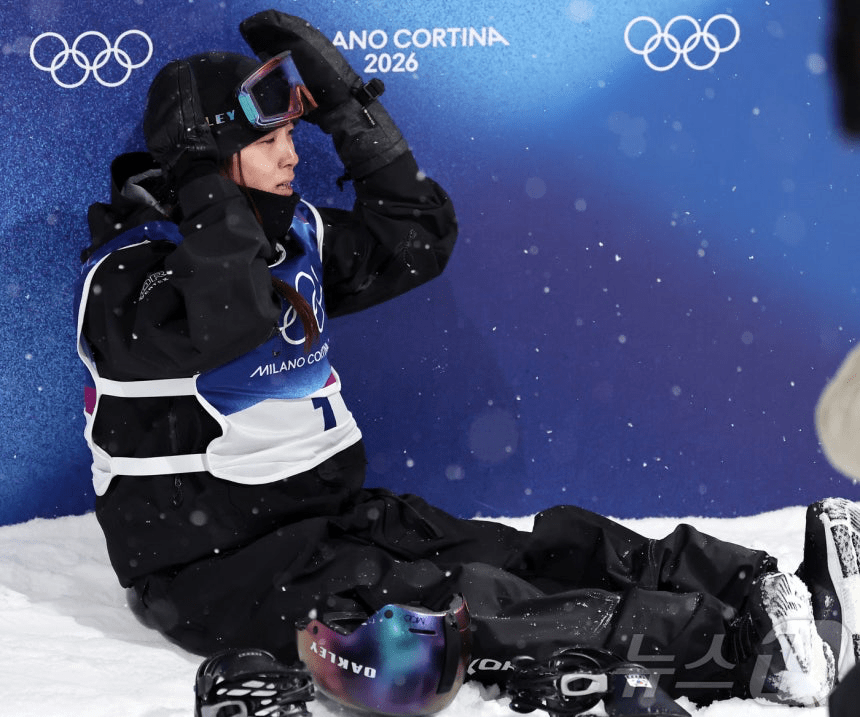
Gaon launched into her opening run and attempted a frontside 1080 — three full rotations. The board clipped the lip of the pipe. She flipped upside down and slammed headfirst into the snow.
Medical staff rushed in. The crowd went silent.
She lay there for what felt like minutes. She eventually rode down under her own power, but the scoreboard showed the two words that chilled everyone watching: DNS — Did Not Start.
She was listed as a withdrawal from her second run.
The Decision to Keep Going
What happened next is the part that elevates this from a sports story to something more.
“As soon as I went down, I thought I needed to get right back up — but I couldn’t put any weight on my legs,” she said afterward. “The medics told me that if I got on a stretcher, I’d have to go to a hospital. I kept thinking: I’m going to regret it forever if I give up my Olympics right here.”
Her father, standing nearby, said four words: “This is the Olympics.”
She started moving her toes. Feeling crept back into her legs. She turned to her coaches.
“I told them: I am absolutely not doing a DNS.”
Run 2: Another Fall
Gaon dropped into her second run and fell again — a low landing on a switch backside 900. Another incomplete run.
Two runs. Two falls. One run left.
Run 3: The Score Heard Round the World
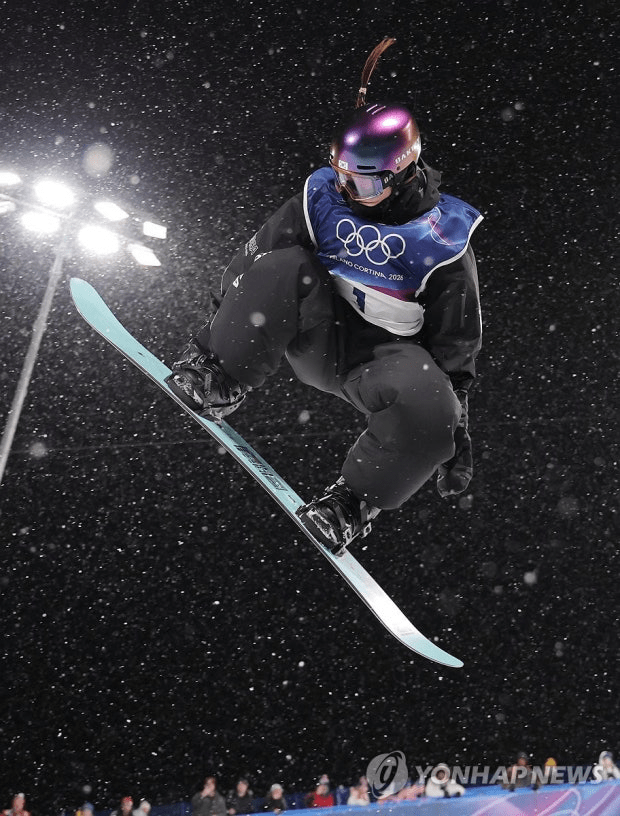
Gaon made a tactical decision: abandon the high-risk 1080 tricks. Bet everything on height, stability, and execution.
Switch backside 900. Cab 720. Frontside 900. Backside 900. Frontside 720. Each hit perfectly timed, each one launching her high above the walls of the pipe into the Italian winter sky.
90.25 points.
The crowd exploded. Gaon was in first place — above Chloe Kim’s first-run score of 88.00.
Kim, riding through a torn labrum injury that had kept her off snow for most of the winter, took her final run. She fell early. The gold medal belonged to Choi Gaon.
“It’s the kind of story you only see in dreams,” Gaon said, tears streaming down her face. “I still can’t believe it.”

Chloe Kim’s Response: Passing the Torch
What made this moment transcend sport was what happened after the run.
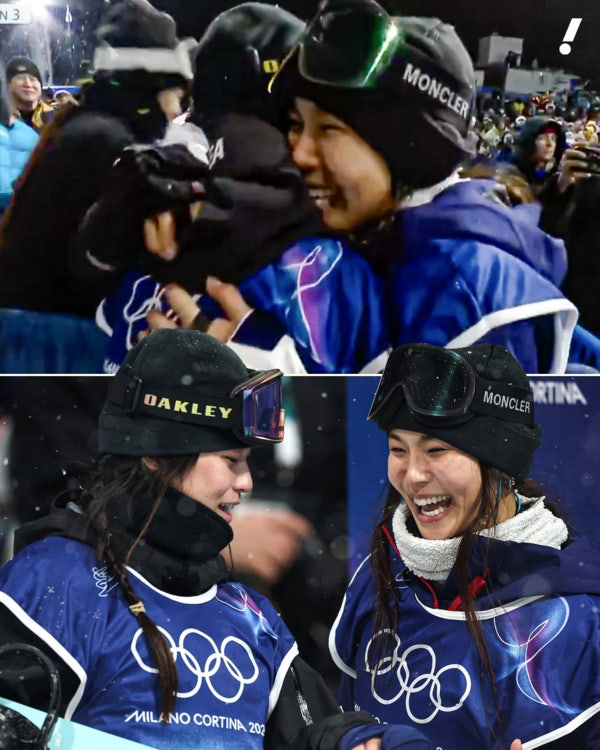
Kim skated straight to Gaon’s celebration and wrapped her in a hug.
“Gaon-ah, neomu jalhaesseo!” (Gaon, you did so well!) Kim called out in Korean — a language she learned partly to connect with the Korean snowboarding community she grew up alongside.
In her post-competition interview, Kim reflected:
“I’ve known Gaon since she was little. She won her first Olympic gold medal at the same age as I did. It’s such a full-circle moment. There’s no one else I would have rather stood next to on the podium than her.”
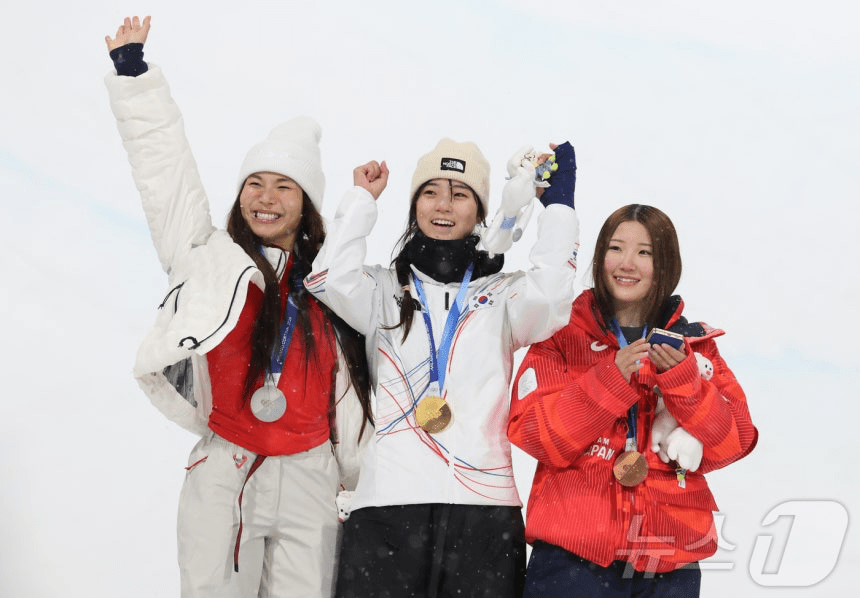
Gaon, standing one step above her idol on the podium with tears in her eyes, said:
“I’m glad I won — but I feel even happier that we competed together.”
Why NBC Named It One of the Top 10 Olympic Moments
NBC, the U.S. Olympic broadcaster, selected Choi Gaon’s victory as one of the Best Moments of the First 10 Days of the 2026 Milano Cortina Winter Olympics — notably remarkable given that NBC’s coverage typically centers on American athletes.
The network highlighted not just the athletic drama, but the unique human dimension of the story: a young Korean girl trained by the American star she eventually defeated, a decade-long mentorship culminating in one snow-flurried night in the Italian Alps.
“The only athlete who could stop Chloe Kim from winning three consecutive Olympics was Choi Gaon,” NBC noted in its coverage.
They weren’t wrong.
The Records She Rewrote
| Record | Details |
|---|---|
| 🥇 First South Korean Olympic gold medal in snow sports | Any discipline, any gender |
| 🏂 Youngest Women’s Halfpipe Olympic champion ever | 17 years, 101 days — breaking Chloe Kim’s record (17 years, 10 months, set 2018) |
| 🏅 Youngest X Games halfpipe gold medalist | 14 years, 3 months — breaking Chloe Kim’s record by 6 months |
| 📈 2025–26 World Cup season | Won every World Cup event she entered (3 of 3) |
| 🚫 Stopped Chloe Kim’s Olympic three-peat | First woman ever to win 3 consecutive halfpipe golds — Kim’s bid denied |
What She Said at the Airport Coming Home
When Gaon touched down at Incheon International Airport, a journalist asked her what she wanted to eat.
Her answer: “My grandmother’s yukhoe jeon (Korean beef pancakes). And Dubai chocolate cookies. And malatang.”*
Gold medalist. World record breaker. NBC top moment. Seventeen years old.
The sport, the history, the records — all of it matters. But so does this: she’s a kid who just wants her grandmother’s cooking.

Why This Story Matters Beyond the Medal
Before Gaon’s gold, snowboard halfpipe barely registered in South Korean sports culture. The country’s winter Olympic identity was built on short track speed skating, figure skating (thanks largely to Kim Yuna), and speed skating. Snow sports were something Koreans watched foreign athletes do.
“I’ve always felt a little sad that snowboarding isn’t well known in Korea,” Gaon said before the Games. “I hope that by winning, I can change that.”
She did.
Her victory marks a broader shift that Chloe Kim herself has noticed: “We’re seeing a big shift to Asians being dominant in snow sports,” Kim said after the competition.
Two Korean women — one American-born, one Korean-born — standing on top of the Olympic halfpipe podium. That image did more for snowboarding in South Korea than a decade of promotion could.
Final Results — 2026 Milano Cortina Women’s Halfpipe
| Rank | Athlete | Country | Score |
|---|---|---|---|
| 🥇 1st | Choi Gaon | South Korea | 90.25 |
| 🥈 2nd | Chloe Kim | United States | 88.00 |
| 🥉 3rd | Ono Mitsuki | Japan | 85.00 |
| 4th | Sara Shimizu | Japan | 84.00 |
| 5th | Rise Kudo | Japan | 81.75 |
The Bottom Line
I opened this post by admitting I’m not a snowboard expert. I still couldn’t explain the technical difference between a frontside 900 and a backside 900. But I know what it means when someone falls twice in a competition and finds the will to stand back up one more time. I know what it means when the person you defeated runs over to hug you.
Choi Gaon rewrote Korean sports history on a snowy night in northern Italy. She became the first South Korean to win an Olympic gold medal in snow sports. She broke world records that her own idol had set. And she did it with grace, grit, and a quiet competitive fire that burns so steadily it’s almost easy to miss — until she’s standing on top of the podium.
NBC saw it. The world saw it.
Now you know the full story.
Did you watch Choi Gaon’s final run live? Drop a comment below — I want to know where you were when it happened.
If this story moved you, share it. South Korean snowboarding just found its champion, and the world should know her name.
 JJJOZ BLOG
Leave a comment