
Paper is not typically considered a structural material. It tears, it absorbs moisture, it loses integrity under stress. Hanji (한지) — traditional Korean paper made from the inner bark of the paper mulberry tree (Broussonetia papyrifera) — behaves differently enough from this baseline that comparing it to ordinary paper is more misleading than useful. The more accurate comparison is to linen or ramie: a bast fibre material with its own tensile logic, its own surface character, and its own constraints that define what it can and cannot do.
That repositioning matters for understanding why hanji has attracted serious attention from textile and fashion designers in recent years — not as a novelty or a sustainability gesture, but as a material with properties that happen to solve specific design problems.
What Hanji Is, Structurally
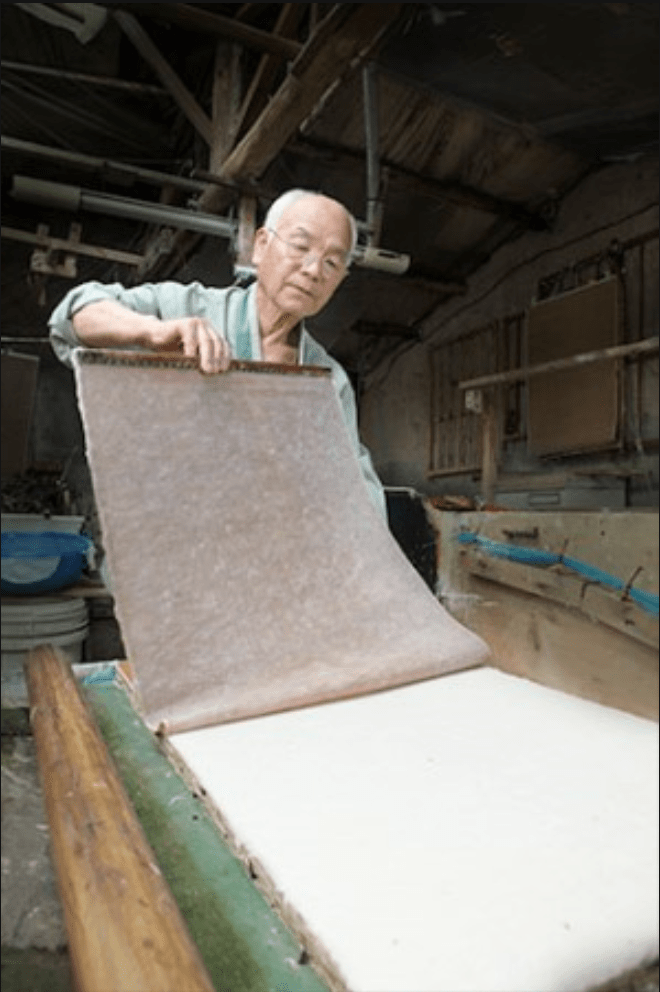
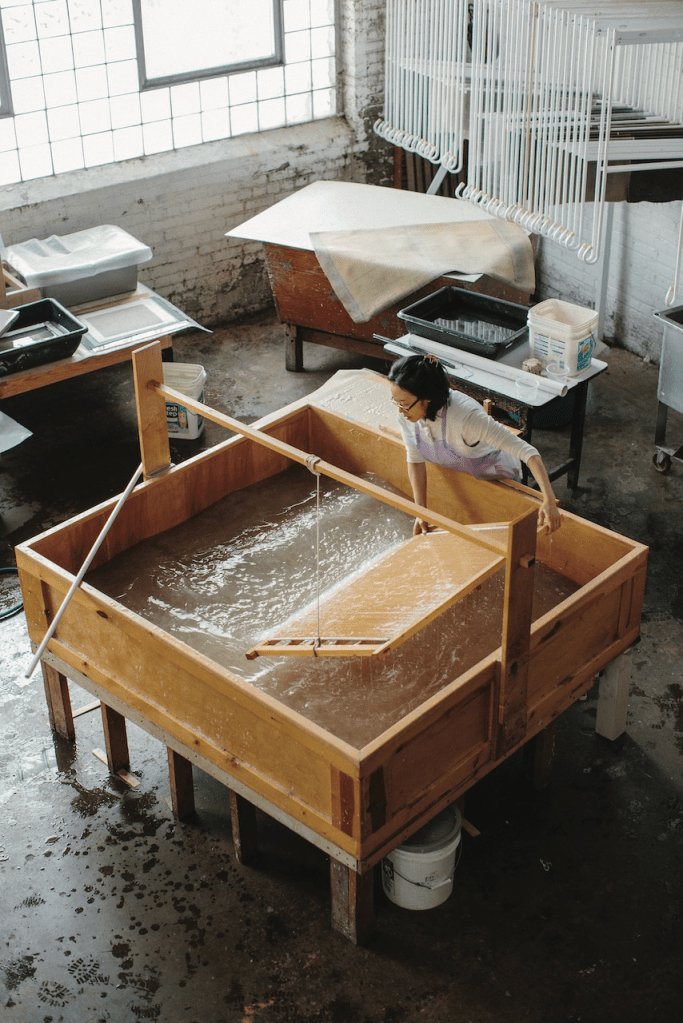
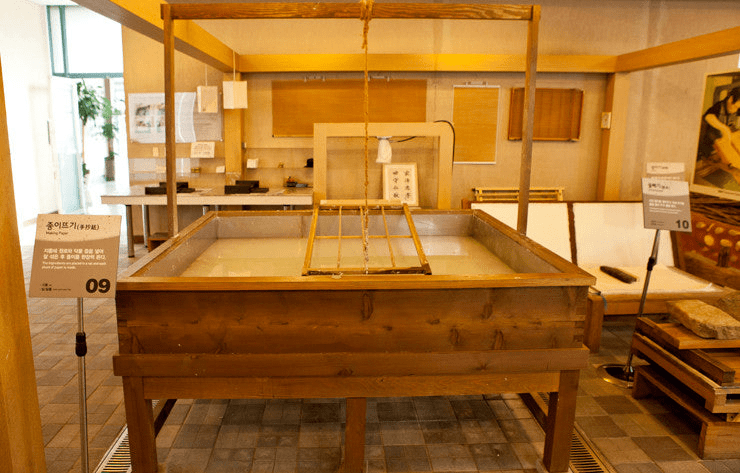
Hanji is made through a process called jangpan (장판지) papermaking, which differs from Western papermaking in a fundamental way: the fibres are beaten more thoroughly and oriented less uniformly, producing a sheet with strength distributed in multiple directions rather than primarily along the grain. This is why historical hanji documents have survived conditions — humidity cycles, insect exposure, physical handling — that would have destroyed Western paper of equivalent age. The craft’s own description of hanji as “천년 한지” (thousand-year paper) refers to this durability, not to any mystical property of the material.
The mulberry bark fibres are long relative to most paper fibres — longer fibres mean more surface contact between strands, which means more friction-based cohesion without requiring as much binding agent. The resulting sheet has a tensile strength that can be measured and compared: treated hanji used in fashion applications typically achieves values closer to thin woven textiles than to conventional paper. It can be folded, stitched, and — depending on treatment — wetted and dried without losing structural integrity.
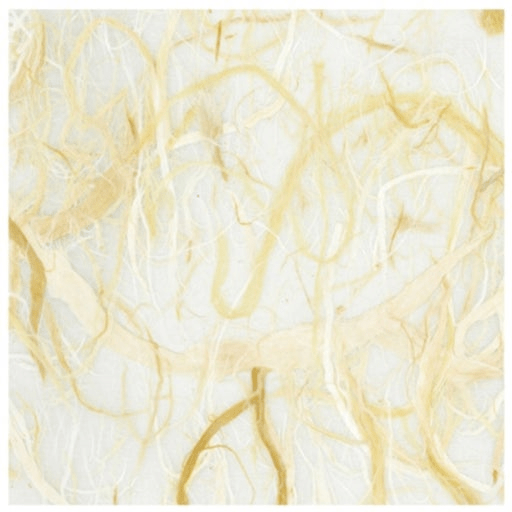
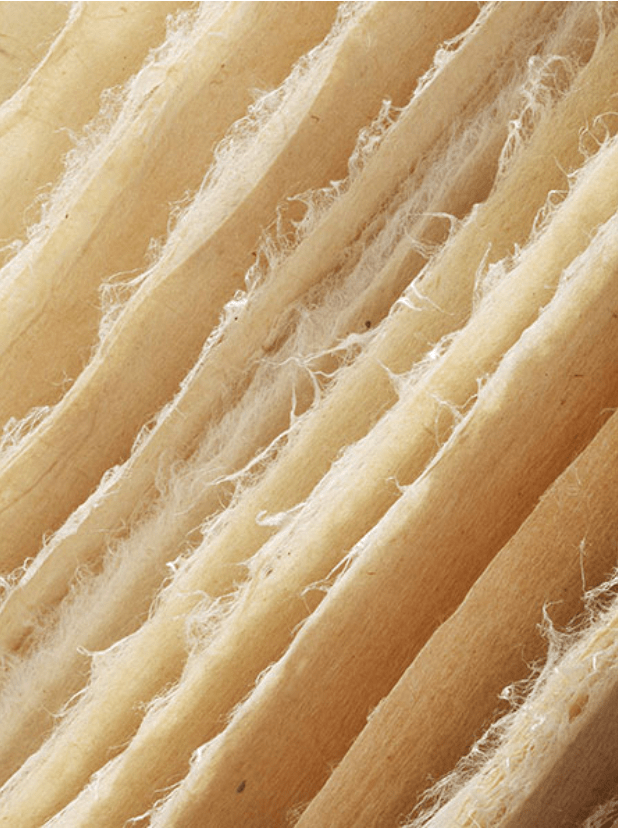
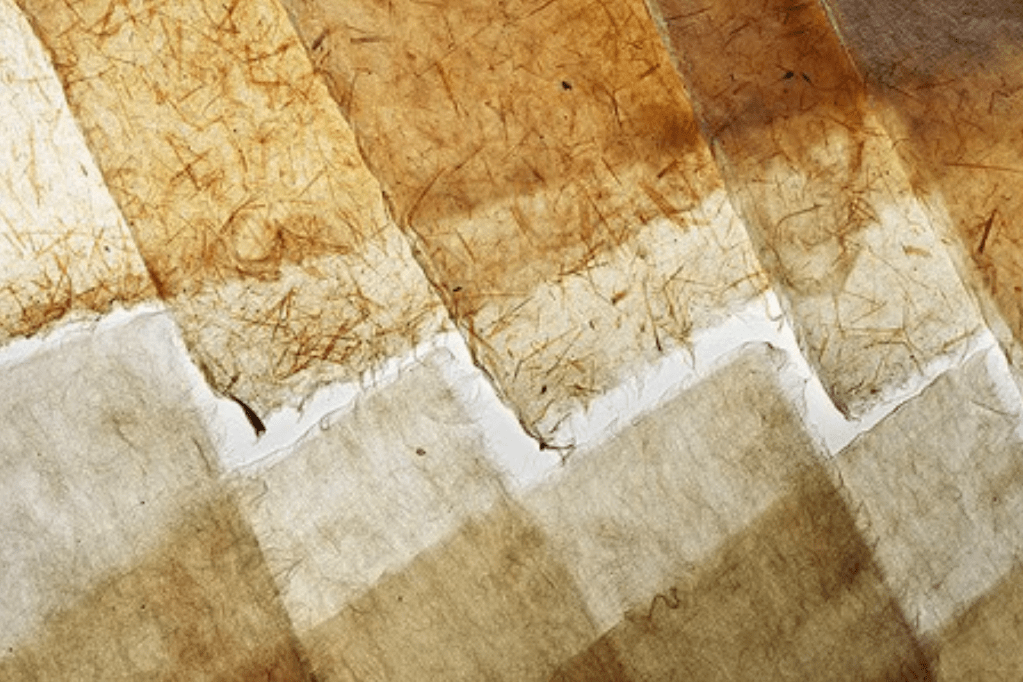
The surface varies considerably depending on the specific production method, the degree of beating, and any post-processing. Minimally processed hanji is fibrous and matte, with visible texture. More heavily processed versions can be smooth enough to take fine print. The translucency varies accordingly — thin, lightly beaten hanji allows light transmission in a way that has been used to deliberate effect in garment contexts.
The Specific Properties That Matter for Textile Applications
Breathability in hanji is a function of the non-woven fibre structure: air moves through the material laterally as well as perpendicularly, which produces different thermal behaviour from woven textiles of similar weight. This is a real property with measurable consequences, not a marketing claim — and it is why hanji has been used for centuries in traditional Korean room partitions and bedding as well as in garments.
The antibacterial claim that appears frequently in hanji promotion deserves more careful handling. Mulberry bark does contain compounds — including flavonoids and hydroxycinnamic acids — with demonstrated antimicrobial activity in laboratory conditions. Whether those compounds survive the processing required to produce fashion-ready hanji, and at what concentration, is a more complex question. The claim is not unfounded, but it is often presented with more certainty than the evidence strictly supports.
Dyeability is straightforward: hanji accepts natural dyes well, including the plant-based dyes central to Korean traditional dyeing practice. The surface takes colour with good depth and relatively low dye loss compared to some synthetic fibre bases. For designers working with traditional Korean natural dyeing — jjok (indigo), chija (gardenia yellow), oseberry red — hanji is a compatible substrate in both technical and cultural terms.
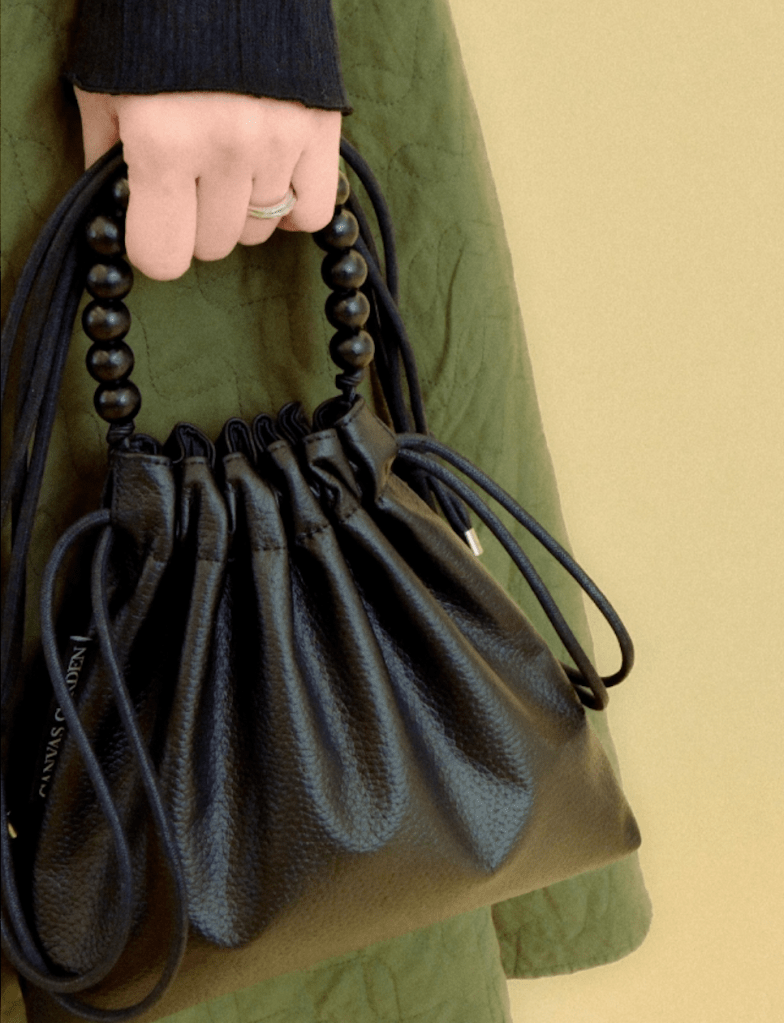
The moisture behaviour is the most consequential property for fashion applications. Hanji absorbs moisture readily, which is part of what gives it breathability, but also means that untreated hanji changes dimension and loses some structural integrity when wet. Fashion applications that require water resistance — bags, shoes, outerwear — require surface treatment, typically with natural waxes, resins, or in contemporary applications a range of bio-based coatings. The treatment changes the surface character and must be accounted for in the design process.
How Seoul Fashion Week Has Used It
Several Seoul Fashion Week presentations over recent years have incorporated hanji as a structural or surface element, and the approaches divide broadly into two types.
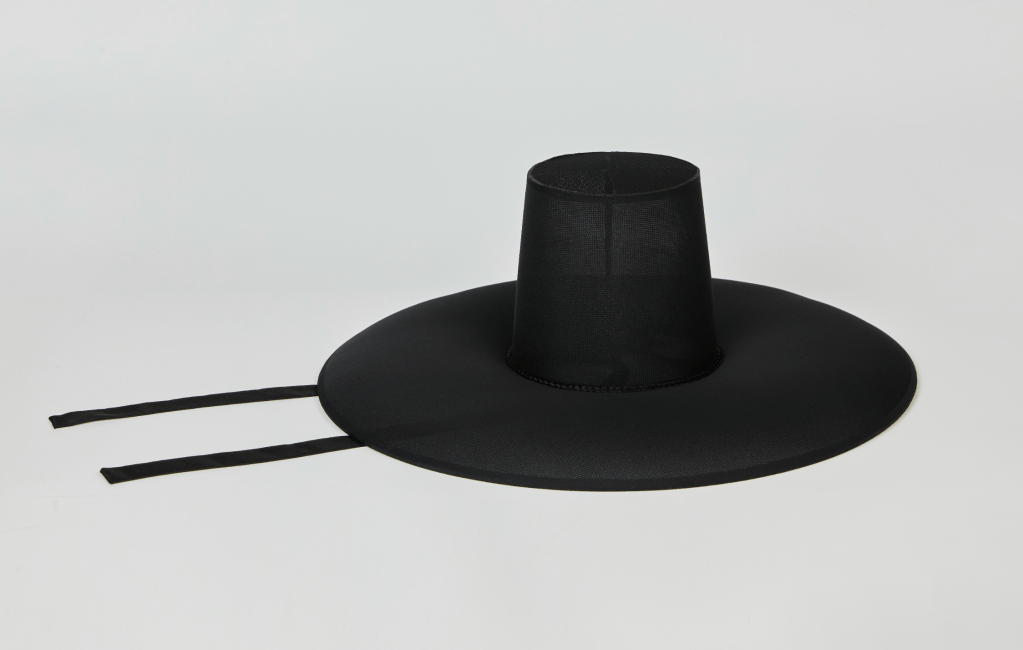
The first uses hanji’s mouldability when damp — the material can be shaped over a form and holds that shape when dry, allowing three-dimensional construction without internal support structures. This has appeared in collar and shoulder constructions, in accessories, and in garment panels where architectural form was the design priority. The constraint here is that the material’s dimensional stability under subsequent moisture exposure requires either surface treatment or acceptance of gradual deformation through wear.
The second approach uses hanji as a textile blend component: hanji spun into thread and woven with cotton, linen, or hemp produces a hybrid fabric with hanji’s surface character and dyeability alongside the mechanical properties of the base textile. The resulting fabric handles more like conventional cloth while retaining something of hanji’s visual texture. This is the more practical route for garments worn in variable conditions.
Accessories — particularly bags — represent the most commercially developed application. Laminated hanji treated for water resistance produces a material with leather-like surface quality at lower weight. Designers including Kilee and Karinaki have produced bags in this category that function as wearable material propositions as much as commercial products: objects that ask the question of what “paper” means when its properties have been significantly modified.

[Check Hanji leather on Haunji->]
The Jeonju Context
Hanji production has been centred in Jeonju, North Jeolla Province, for centuries — the region’s water quality and climate conditions suit the production process, and the craft infrastructure (mulberry cultivation, specialist papermakers, related artisan networks) has concentrated there over time. Jeonju’s identity as Korea’s traditional culture capital is inseparable from hanji.
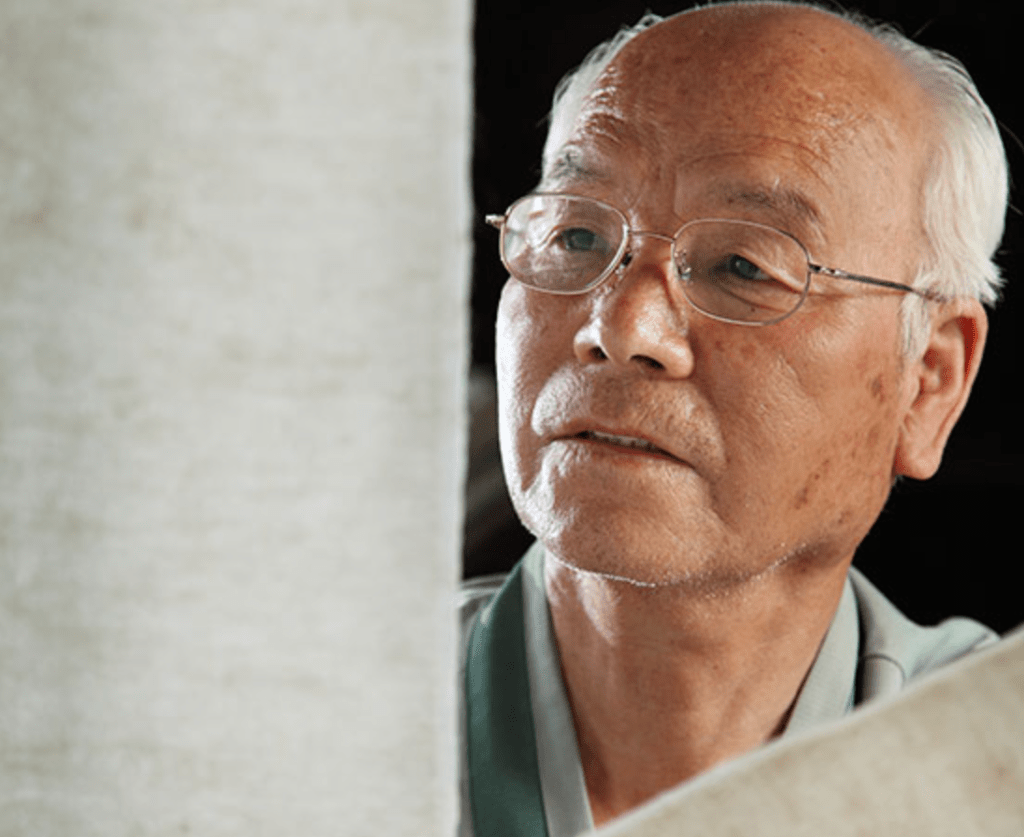
The National Intangible Cultural Heritage designation for traditional hanji papermaking (중요무형문화재 제117호) covers the full process from mulberry cultivation through sheet formation — a recognition that the craft’s knowledge is embodied in practice across multiple stages, not reducible to a single technique. Master papermakers maintain and transmit this knowledge, and the most considered contemporary hanji fashion applications have involved direct collaboration with these practitioners rather than sourcing hanji as a commodity material.
That distinction matters for the quality of the output. Hanji produced by traditional methods using locally cultivated mulberry has different fibre characteristics from hanji produced at industrial scale — the fibre length, the beating degree, the sheet consistency all vary. A designer working with traditional hanji from Jeonju is working with a different material, in meaningful technical terms, from one sourcing industrially produced hanji sheets.
What It Cannot Do
Hanji’s limitations are as instructive as its capabilities. It is not suitable for applications requiring repeated flexing without treatment — the fibre structure fatigues under mechanical stress in ways that woven textiles do not. It is not dimensionally stable in uncontrolled humid environments without treatment. It requires specialist handling in production contexts: standard textile manufacturing equipment is not designed for it, and the production of hanji-based garments at any scale involves either customisation of process or acceptance of high handwork content.
These constraints explain why hanji fashion has developed primarily in the context of artisan production and design research rather than commercial ready-to-wear. They also define where the material’s application makes most sense: in objects where the specific properties of the material — its surface quality, its translucency, its cultural reference — justify the additional production complexity.
Sources: Korean Cultural Heritage Administration, National Intangible Cultural Heritage documentation (No. 117); Korea Craft & Design Foundation (KCDF) material research publications; Jeonju Hanji Culture Festival technical documentation. Material properties referenced against published textile science literature. Fashion applications documented through Seoul Fashion Week press archives and designer communications.

 JJJOZ BLOG
Leave a comment