
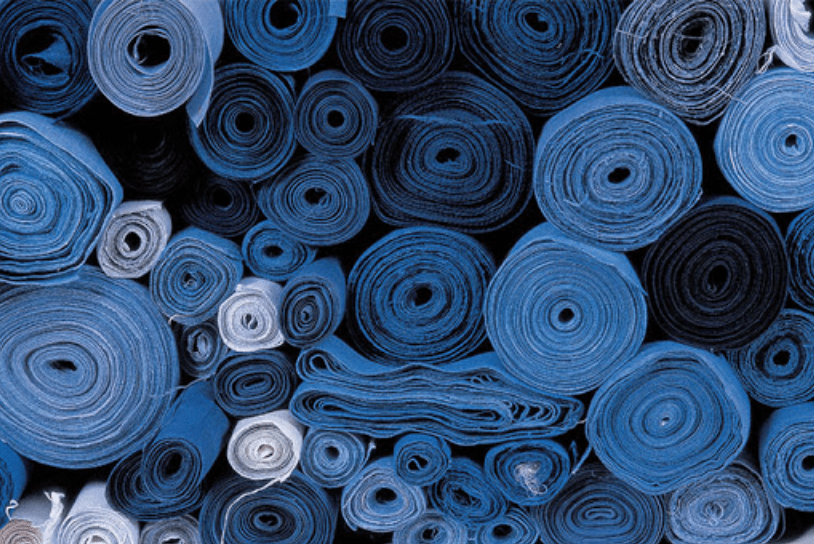
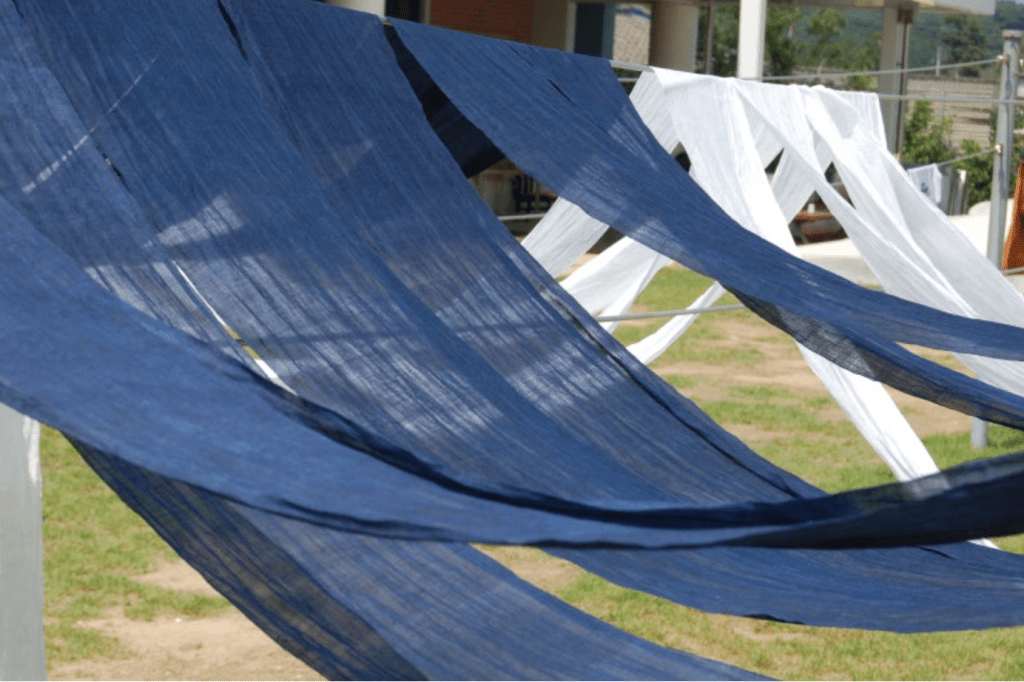
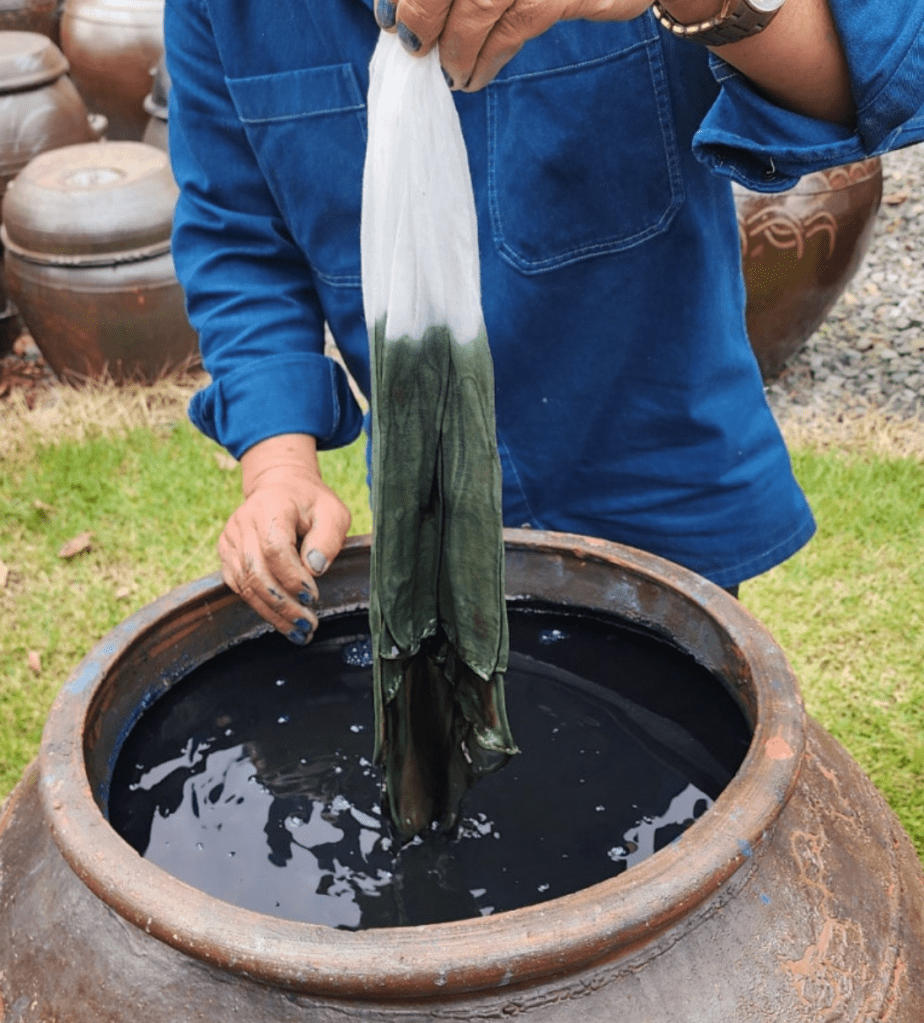
When you pull indigo-dyed cloth from the vat, it looks wrong. The fabric comes out green — a yellow-green, slightly sulphurous colour that bears no obvious relationship to blue. Then oxygen acts on it, and within seconds the cloth shifts: green to teal, teal to blue, blue deepening as you watch. The colour is not in the vat. The colour is produced by the cloth meeting air.
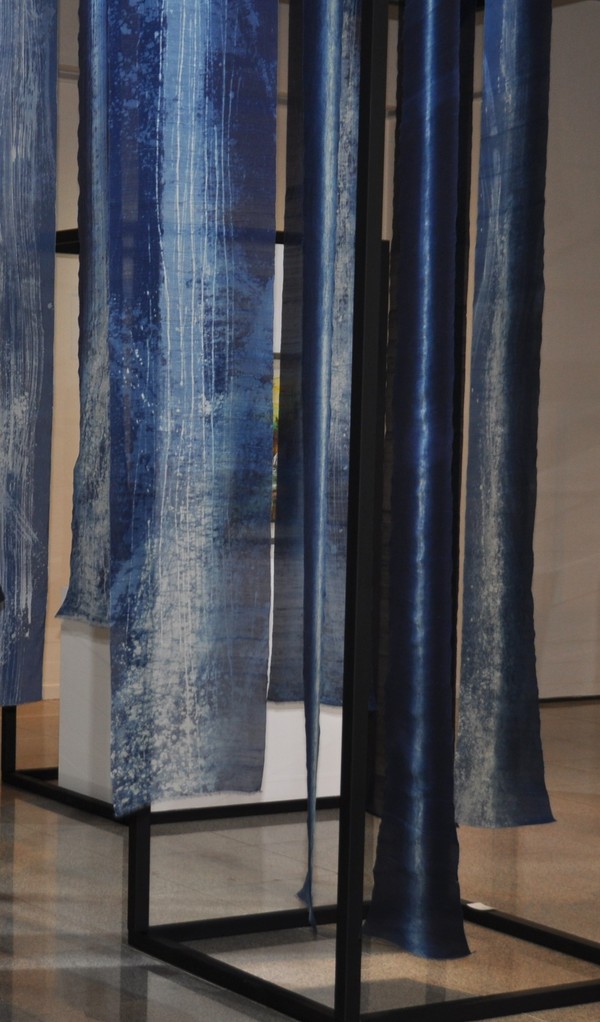
That transformation — fermentation-reduced indigo becoming visible blue through oxidation — is the central chemistry of the craft. It is also why indigo dyeing has the character it does: no single dip produces the final result. The depth of colour in a piece of jjok-dyed cloth is literally the record of how many times it entered and left the vat, how long it oxidised between dips, and what concentration the vat was at during each cycle. The object carries its own process history in its surface.
What Jjok Is
Jjok (쪽) is the Korean term for Persicaria tinctoria — the indigo plant cultivated in Korea for dyeing — and by extension for the dyeing tradition that uses it. The broader practice sits within Korea’s historical culture of natural dyeing, which included a significant range of plant-derived colourants, but indigo occupies a particular position within that tradition: it was historically associated with formal use and high status, connected in the traditional Korean colour system to the obangsaek (오방색) — the five directional colours — in which blue-green (cheong, 청) represents the East.
The connection to formal culture is visible in documentary evidence from Korean dynastic records: the production and management of dye materials was institutionally organised, not left to individual practice. Indigo blue appeared in court costume, in Buddhist textile arts, in the clothing of the yangban class. The distance between the craft and the elite context of its products was, for most of Korean history, shorter than the modern workshop framing of “traditional craft” might imply.
Naju and the Geography of Korean Indigo
When Korean cultural sources discuss jjok dyeing, Naju (나주) in South Jeolla Province appears consistently — and not arbitrarily. Naju’s historical prominence in the Korean textile economy relates to environmental factors: the region’s climate and river basin conditions suit indigo cultivation, and the area maintained infrastructure — cultivation, processing, textile production — that concentrated expertise over time.
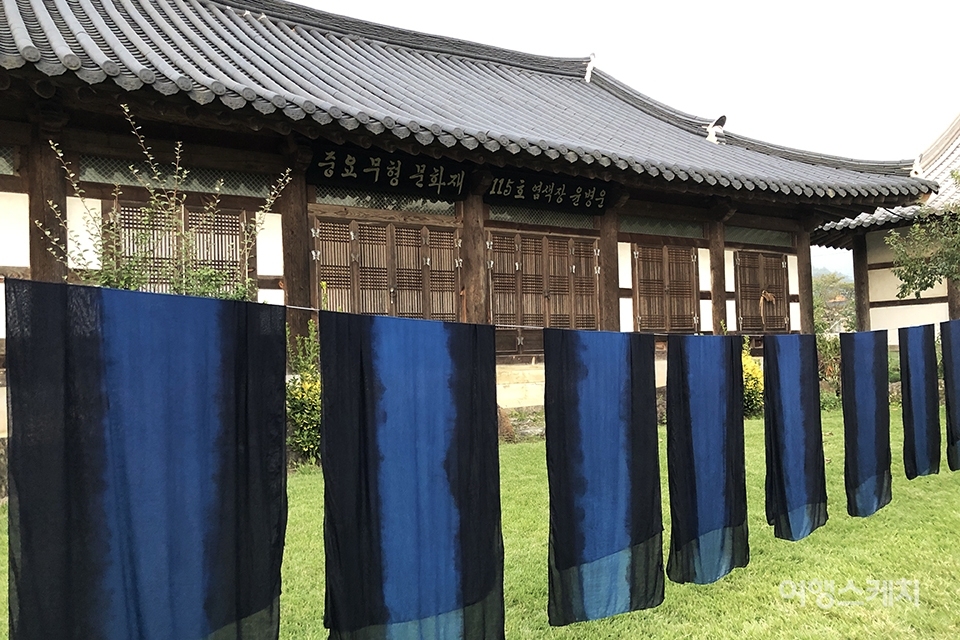
That concentration produced the conditions for mastery. The craft’s most formally recognised living practitioner, Jung Kwan Chae, holds the government designation of National Intangible Cultural Heritage No. 115 in natural dyeing, and his practice is based in Naju. The Junggwanchae (정관채) — his studio and historic production space — is the most directly documented example of the Naju indigo tradition in continuous operation.
The Natural Dyeing Culture Center (나주천연염색문화관) in Naju functions as both a museum and an active cultural space, presenting the regional dyeing tradition through exhibitions, demonstrations, and workshop programmes. It is one of the more substantive places to encounter the craft in a context that explains the full agricultural and technical process, not just the final object.
The Process, Broken Down Honestly
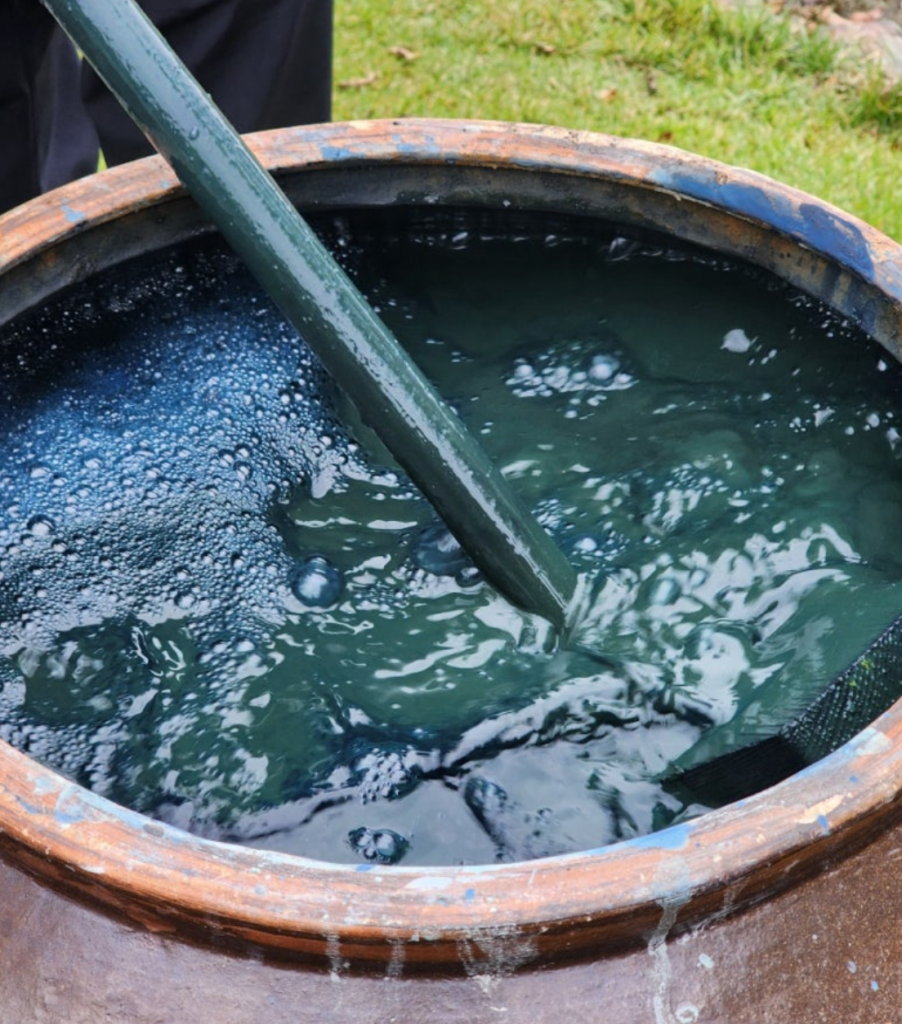
Indigo cannot be simplified into a simple dye recipe, because the chemistry is genuinely more complex than most plant-based colourants. The dye compound — indigotin — is not water-soluble in its natural state. To dye fabric, it must be reduced to a soluble form through fermentation, applied to the fibre, then oxidised back to its insoluble form within the fibre. That is why the cloth turns blue in contact with air: the soluble reduced form reverts to insoluble blue as oxygen is introduced.
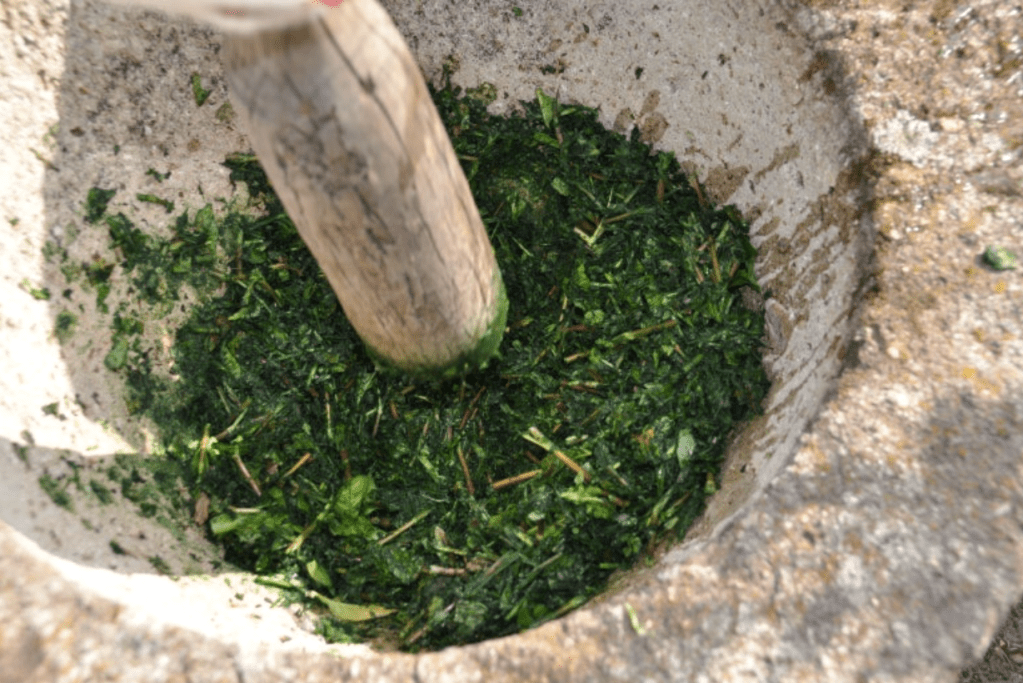
The traditional Korean fermentation vat process begins well before dyeing. Growing and harvesting the jjok plant is itself a months-long process, timing the harvest to maximise the concentration of dye precursor in the leaves. The plant material is processed — in the Naju tradition, this involves grinding or macerating the leaves — and the resulting material is combined with lime (historically derived from oyster shells in coastal Jeolla Province, contributing to the regional specificity of the process), water, and fermentation agents. The vat requires daily maintenance: monitoring its pH, its temperature, its reduction state. An experienced dyer reads the vat by smell, colour, and surface behaviour — the foam pattern on a working vat has a specific character that indicates whether reduction is proceeding correctly.
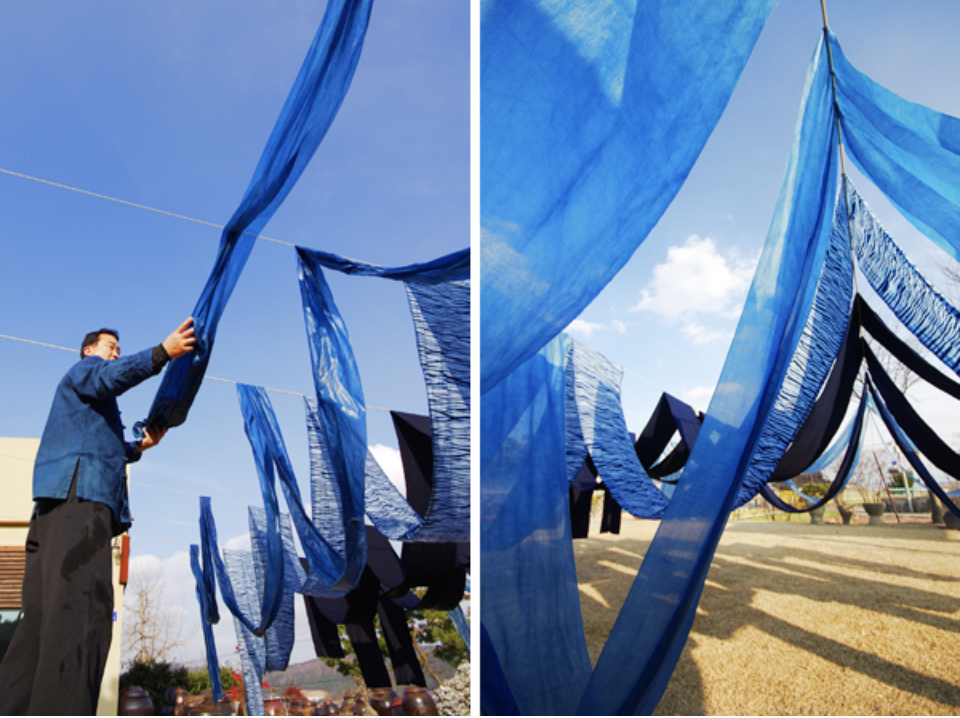
Once the vat is active, dyeing proceeds through repetition. The fabric is dipped, removed, and left to oxidise. The first several dips may produce only a pale grey-blue. Depth accumulates gradually, and the relationship between dip count and final colour is not linear — the rate of deepening slows as saturation increases. Achieving a deep navy through traditional fermentation vat process requires considerably more dips than achieving a medium blue. The pale washes achievable in three or four dips are not failures — they are a different, earlier point in the colour range.
The Aesthetic Argument for Natural Indigo
There is a version of this conversation that frames natural dyeing in terms of sustainability, and that framing is not wrong, but it tends to obscure what is actually interesting about the aesthetic result. Synthetic indigo — identical in molecular structure to natural indigotin — has been available since 1897 and now dominates commercial production globally. The environmental case for natural dyeing is genuinely complicated: fermentation vat processes require water, time, and inputs that have their own resource implications.
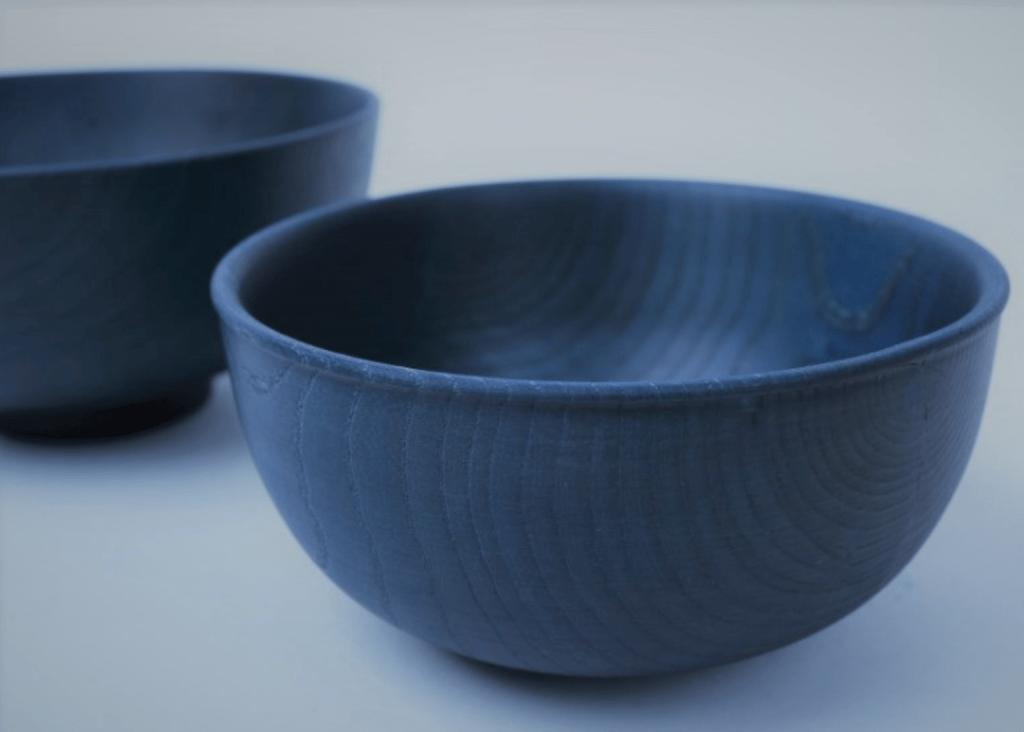
What synthetic indigo cannot produce is the colour variation that comes from a living vat applied to natural fibre. Traditional jjok-dyed cloth shows subtlety across the surface — not the uniform coverage that characterises synthetic denim, but slight variation in depth that registers as texture even in a single-colour piece. The colour also fades differently over time: natural indigo oxidation continues slowly throughout the life of a garment, producing a patina rather than a uniform bleaching effect. That aged quality is partly what the contemporary Japanese natural dyeing tradition has valorised, and it is present in Korean jjok work for the same chemical reason.
Whether that aesthetic quality justifies the price differential between natural and synthetic indigo is a question of values and use, not technique. The craft makes most sense when the material specificity — the variation, the process depth visible in the surface — is the point of the object rather than incidental to it.
Indigo in Seoul, and What the Workshop Experience Tells You
Natural dyeing workshops are available in Seoul, typically packaged as half-day cultural activities concentrated in neighbourhoods like Insadong and through museum programme schedules. These experiences are beginner-accessible and compress the process significantly — using prepared dye solutions rather than full fermentation vat work. The educational value is real: physically handling dyed cloth, observing the oxidation colour shift in person, and understanding the fold-and-bind resist techniques used to create pattern all communicate something about the craft that images do not.
What the workshop format cannot provide is a sense of the full process timeline. A working fermentation vat takes weeks to establish and months of maintenance. The agricultural dimension — growing the jjok plant, timing the harvest — is entirely invisible in a city workshop context. That compression is not a failing of the experience; it is worth knowing in advance so that you understand what you are and are not encountering.
For the full picture of the craft, the Naju context remains the most substantive. The gap between a Seoul workshop and a working Naju dyehouse is approximately the same as the gap between a cooking class and a restaurant kitchen: both are real, and they teach different things.
Sources: Korean Cultural Heritage Administration, National Intangible Cultural Heritage documentation (No. 115); Natural Dyeing Culture Center, Naju programme materials; Korea Tourism Organization regional documentation. Indigo chemistry referenced against peer-reviewed textile science literature available via PubMed and Korean craft scholarship archived at the Academy of Korean Studies (AKS).

 JJJOZ BLOG
Leave a comment