
Jagae, sometimes written as “najeon chilgi” in its complete form, represents one of Korea’s most distinctive and refined traditional crafts. This meticulous art form combines lacquerware (chilgi) with mother-of-pearl inlay (najeon) to create objects of extraordinary beauty and cultural significance.Despite its historical importance, jagae remains less internationally recognized than other Korean crafts, making it a fascinating subject for those interested in Korean material culture.

The Origins and History of Jagae
The tradition of jagae dates back to the Goryeo Dynasty (918-1392), reaching its artistic peak duringthe Joseon Dynasty (1392-1910). Historical records indicate that the technique likely originated from cultural exchanges with China, though Korean artisans developed distinctive aesthetic approaches that set jagae apart from similar techniques in other Asian countries.
During the Goryeo period, jagae was primarily associated with Buddhist artifacts and royal commissions. Joseon-era jagae shifted toward secular objects, reflecting neo-Confucian values through motifs and design choices. Throughout Korean history, jagae items served as status symbols for the aristocracy and royal household, with ownership of fine examples indicating refined taste and social standing.
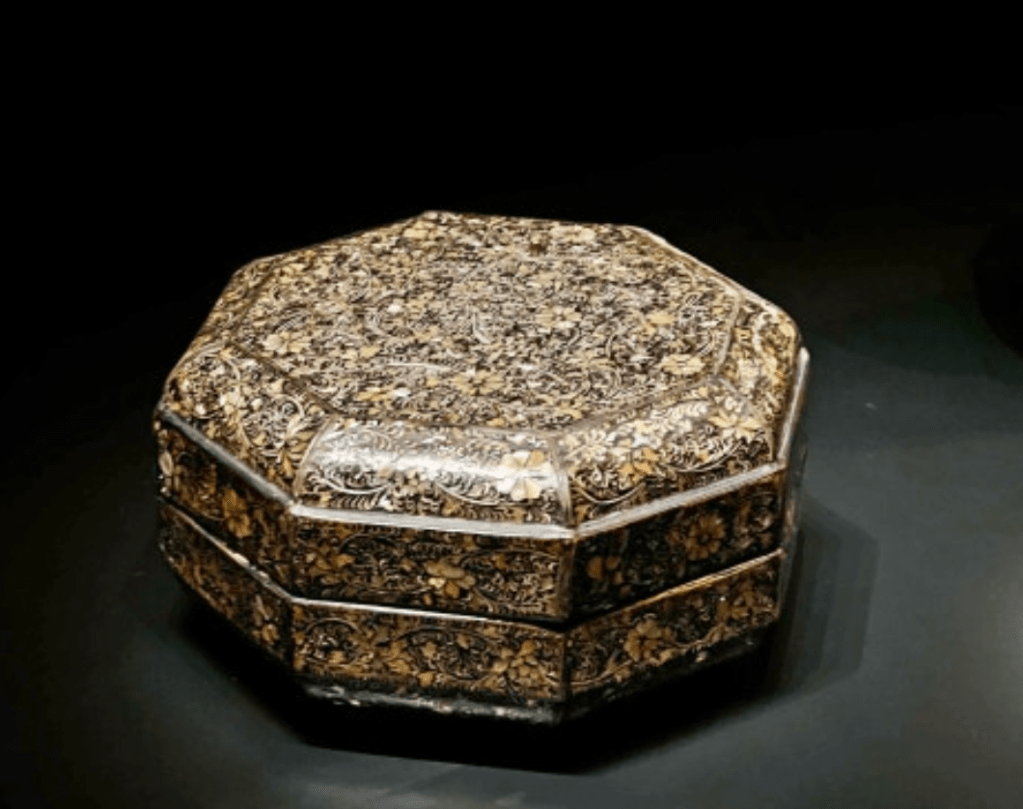
The Japanese colonial period (1910-1945) marked a challenging time for traditional Korean crafts, including jagae. Many master artisans were forced to adapt their techniques to Japanese aesthetic preferences or abandon their craft entirely. The Korean War further disrupted transmission of these specialized skills, nearly causing the tradition to disappear.
The Jagae Creation Process
What makes jagae extraordinary is its labor-intensive production process, which has remained largely unchanged for centuries. Creating a single piece involves multiple specialized techniques and can take months or even years to complete.
The foundation begins with careful wood selection—traditionally persimmon or paulownia wood—chosen for stability and resistance to warping. Artisans build the base structure, then apply multiple layers of lacquer derived from the sap of the lacquer tree (Toxicodendron vernicifluum). Each layer must dry completely before the next application, a process that requires specific humidity and temperature conditions.
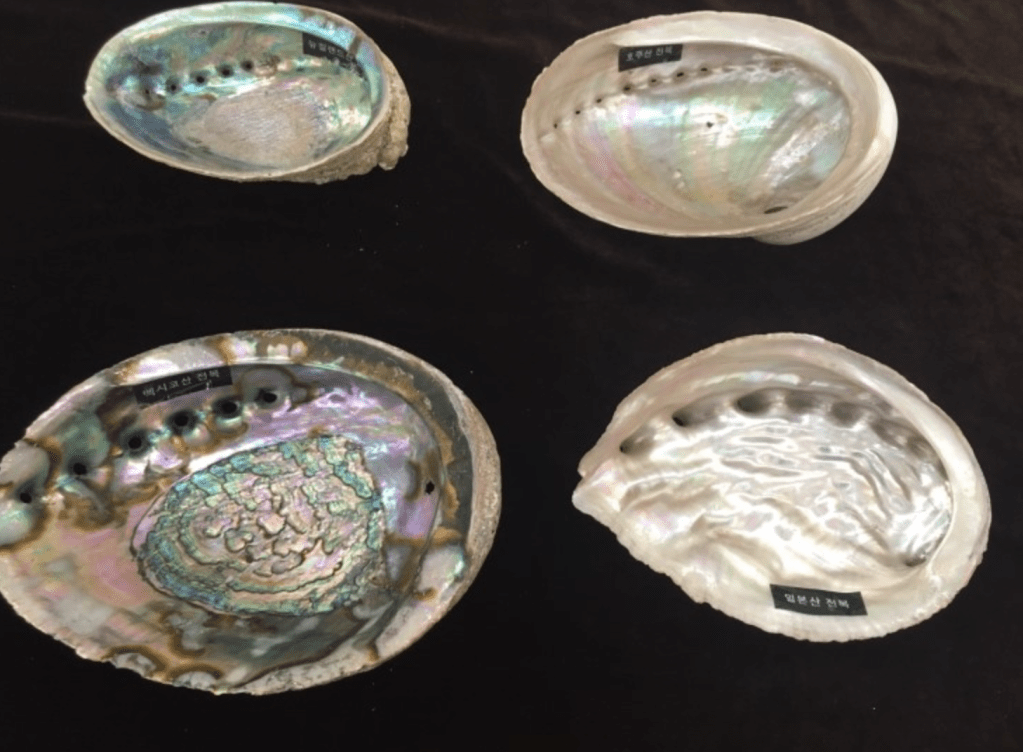
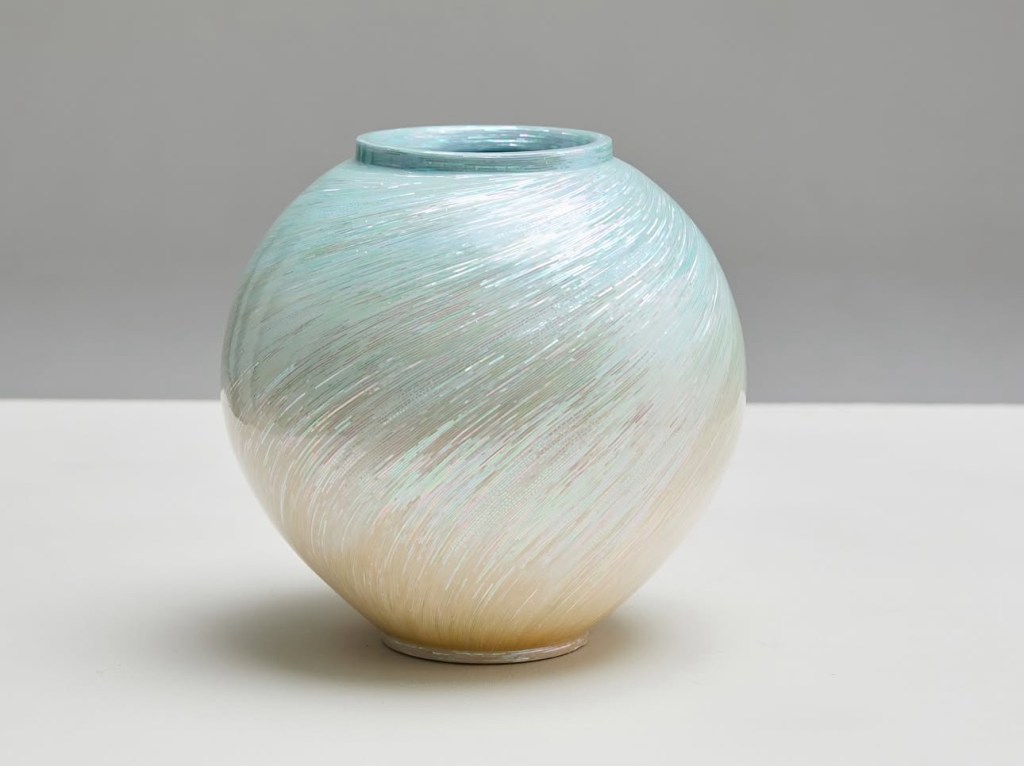
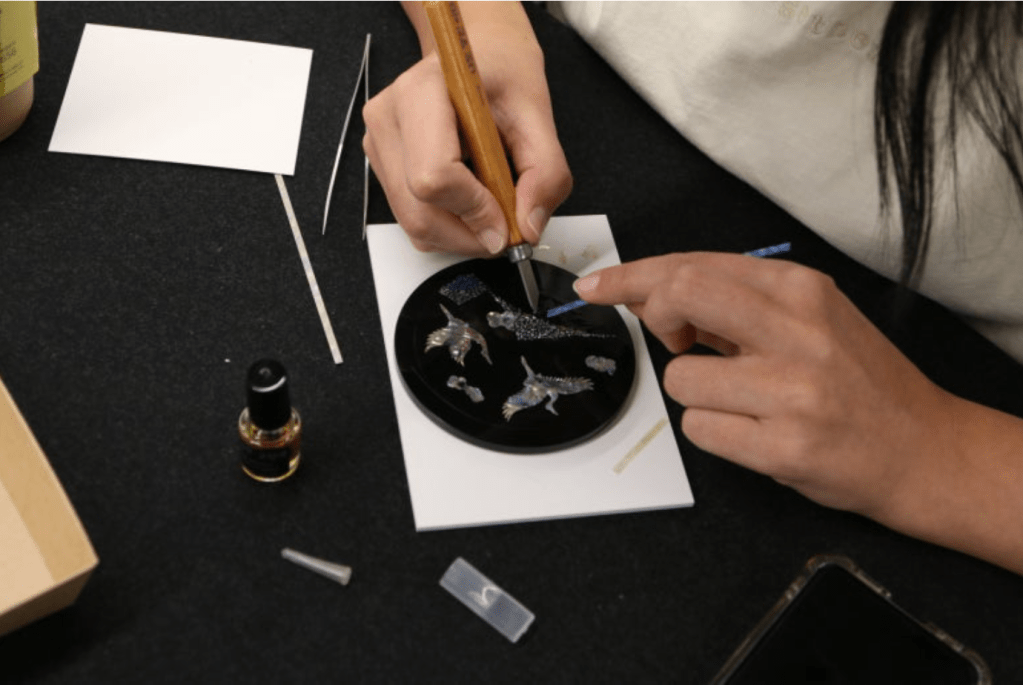
The mother-of-pearl inlay work constitutes the most distinctive aspect of jagae. Artisans select abalone, pearl oyster, or other shellfish with iridescent surfaces. They meticulously slice these shells into paper-thin pieces, then cut them into various shapes according to the design. Traditional patterns include floral motifs, landscapes, birds, and symbolic representations. The delicate shell pieces are carefully embedded into the lacquered surface while it remains slightly tacky.
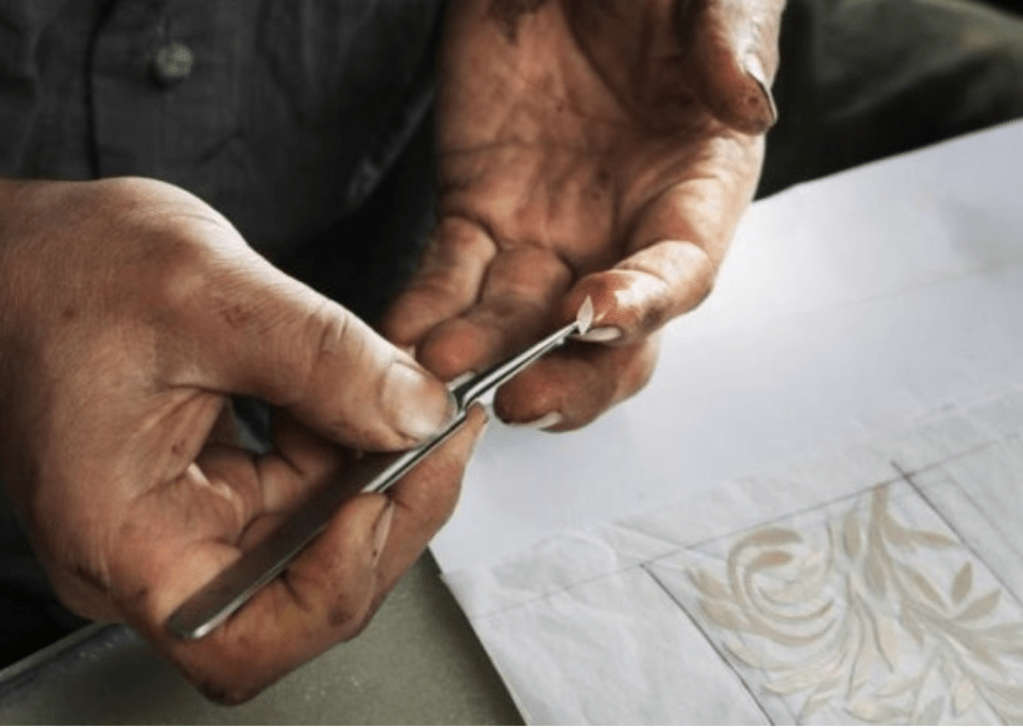
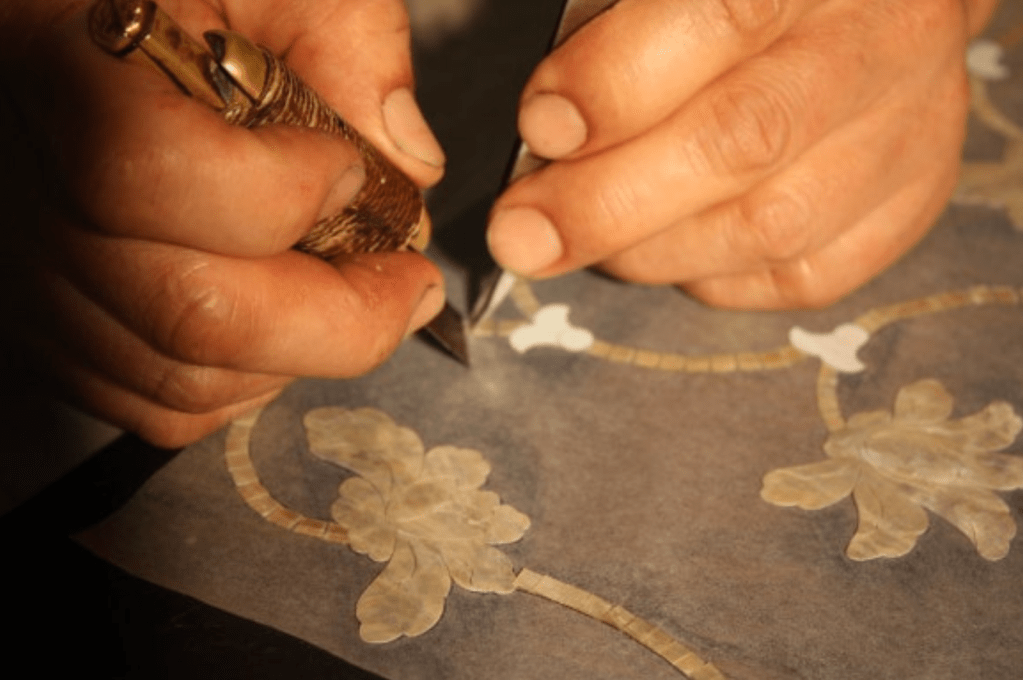
After completing the inlay work, artisans apply additional lacquer layers, carefully polishing between each to achieve a smooth surface that protects the inlay while allowing its natural luminescence to shine through. The final polishing process brings out the characteristic depth and gleam that distinguishes fine jagae work.
Contemporary Significance of Jagae
Today, jagae stands at an interesting cultural crossroads. Recognized as an Important Intangible Cultural Heritage by the Korean government, efforts to preserve this craft have intensified. Master artisans receive designation as “Living National Treasures,” with responsibilities to document their techniques and train apprentices.

Contemporary jagae practitioners range from strict traditionalists to innovative artists who incorporate the technique into modern design contexts. Traditional applications include furniture pieces like small chests, stationery boxes, and decorative screens. Modern interpretations extend to jewelry, home accessories, and even collaborative projects with fashion designers and interior architects.
The National Museum of Korea houses exceptional historical examples of jagae, allowing visitors to appreciate the craft’s evolution. Special exhibitions occasionally highlight contemporary work,demonstrating how living artisans interpret this heritage art form.
Challenges and Future Prospects
Despite preservation efforts, jagae faces significant challenges. The time-intensive nature of authentic jagae makes it prohibitively expensive compared to mass-produced alternatives. Many contemporary consumers lack awareness of the technical mastery involved, making it difficult for artisans to command appropriate prices for their work.
Environmental concerns present another challenge. Traditional lacquer harvesting impacts lacquer trees, while mother-of-pearl sourcing raises sustainability questions. Progressive artisans are exploring responsible harvesting practices and alternative materials that maintain aesthetic qualities while addressing ecological concerns.
Digital documentation plays an increasingly important role in preserving jagae techniques. Several organizations have created detailed records of master artisans’ processes, ensuring these methods won’t be lost even as the community of practitioners evolves.
Education initiatives represent another promising development. Programs introducing jagae to young Koreans help cultivate future appreciation for this heritage craft. International cultural exchanges have begun to introduce jagae to global audiences, creating new markets for practitioner’s work.
Experiencing Jagae Today
For those interested in experiencing jagae firsthand, several options exist. The Hanok villages in Seoul and traditional craft centers in cities like Tongyeong offer demonstrations and workshops where
visitors can learn basic techniques. Specialized galleries in Insadong (Seoul) showcase contemporary jagae creations available for purchase.
As interest in authentic cultural experiences grows globally, jagae stands poised for wider recognition.Its remarkable combination of natural materials, meticulous craftsmanship, and distinctive aesthetic represents Korean cultural heritage at its finest. Whether appreciated as historical artifacts or contemporary artistic expressions, jagae pieces embody centuries of accumulated knowledge and artistic sensitivity, connecting present admirers to Korea’s rich material culture.
 JJJOZ BLOG
Leave a comment